
There are 5 ways businesses can adapt during an industry slowdown
Published: September 11, 2026
Key Strategy Takeaways
- Identify the root causes of an industry slowdown before making major business decisions.
- Focus on retaining existing customers and strengthening customer relationships.
- Reduce unnecessary costs while maintaining product and service quality.
- Explore new products, customer segments, online channels, and service opportunities.
- Use small experiments to test what customers are willing to buy.
- Invest in employee training, technology, and process improvements during slower periods.
- Prepare the business early so it can respond quickly when demand and growth return.
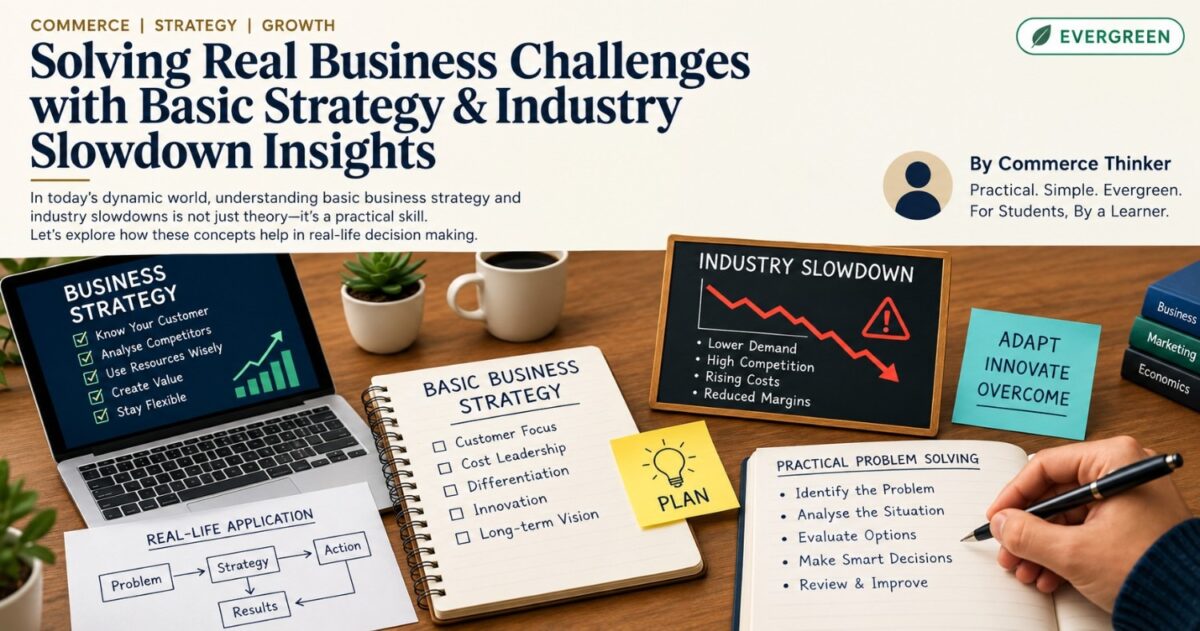
1.All industries have their highs and lows.
Of course, sometimes customer demand decreases, sales are difficult to get, and businesses start to wonder what’s next in their life. While it may be an industry slowdown, it doesn’t necessarily translate to a business doomed for failure.
Rather, a slowdown may be an opportunity for businesses to take a fresh look at their plans, learn more about their customers, and get ready for future expansion. With a basic approach to the operation of the enterprise, companies will be able to remain calm and avoid rash actions.
Therefore, a few tips on how businesses can react to the economy beginning to slow down in your industry.
Determine why the slowdown is occurring. Determine the factors that are slowing down the process.
It is important to grasp the reasons for the industry’s deceleration. Are actual sales down on your products and/or services? Are prices increasing? Are there any new players in the arena? Are customers’ tastes and desires evolving?
Businesses need to take into account numbers, customer feedback, market trends, and the activities of competitors. Knowing exactly what the issue is helps one to select the best solution.
A strategy that would make more sense, for instance, would be to offer an option that is affordable, rather than increasing your spending on advertising, if customers are spending less because of rising living costs.
- Concentrate on current customers.
It’s harder and more costly to secure brand new customers during an industry slowdown. This makes your customers already very special.
Customer connections can be improved through the enhancement of service, customer loyalty, helpful offers, and frequent communications with customers. You can also benefit from customers’ needs with an edge over your competitors.
If a customer already has a degree of trust in a business, he or she is likely to return more easily than an unknown customer.
- Maintaincosts within budget yet keep quality up.
In times of low sales, of course, companies will look for ways to save money. However, if costs are lowered too quickly, other problems will occur.
Rather, companies need to go through the process of pinpointing waste and optimizing processes. They may monitor subscriptions and stock, supplier contracts, marketing expenses, and procedures.
The aim is to spend less—that’s not the goal. The aim should be to spend wisely without compromising the products, services, and customer experience, which keeps the business competitive.
- Take advantage of new opportunities.
Don’t assume that if one thing is slow, it means that all opportunities have passed. The needs of customers continually change, and businesses that are ready will always find opportunities.
It may be for a new product that a business launches, a different target audience, a new online platform for a business, or a change in a service. It may be a new product, new customers, a new expansion onto the web, or a change in a service. The small experiments will assist businesses in finding what customers are willing to purchase.
For example, if they run a shop, they can think about selling online or providing delivery services as well as foot traffic.
- Prepare for the following GROWTH CYCLE
Perhaps the most common error that companies make in a downturn is to just react to the immediate crisis and not pay attention to how they can look to the future and evolve. It’s also important to plan for the future.
When the business is not as busy, they can focus on employee training, technology development, money considerations, research on the competition, and process refinement. When demand starts to pick up, a well-prepared company reacts quicker the more prepared it is.
By planning, the already challenging situation can be bettered and made an opportunity to become stronger and more efficient.
Conclusion
A downturn in the industry can bring about uncertainty, but it can also allow companies to re-evaluate their operations. Keeping up to date with the problem, maintaining existing clients, controlling the expense, finding new areas of business opportunity, and planning for future growth are all concrete steps that could help.
It’s not always a dramatic change that is the best basic business strategy. At times, it comes down to good decision-making at the right time, keeping close to customers, and readiness to adapt.
This may be difficult, but businesses can turn it into an opportunity to take time, be flexible, and avoid problems to increase their long-term success.
Frequently Asked Questions
What is an industry slowdown?
An industry slowdown occurs when demand, sales, investment, or overall business activity in a particular industry decreases. It can result from changing customer behavior, economic conditions, rising costs, increased competition, or other market factors.
How can businesses respond to an industry slowdown?
Businesses can respond by identifying the cause of the slowdown, retaining existing customers, controlling unnecessary costs, exploring new opportunities, and preparing their operations for future growth.
Why should businesses focus on existing customers during a slowdown?
Existing customers already have some level of trust in the business, making them more likely to return. Strengthening customer relationships can also be more cost-effective than acquiring completely new customers.
How can a business reduce costs without affecting quality?
Businesses can review subscriptions, inventory, supplier agreements, marketing expenses, and internal processes to identify unnecessary spending. The goal should be to eliminate waste while maintaining product, service, and customer experience quality.
What causes an industry slowdown?
An industry slowdown can be caused by lower customer demand, rising prices, changing consumer preferences, stronger competition, economic uncertainty, supply issues, or changes in technology and market conditions.
Should businesses reduce their marketing during a industry slowdown?
Not necessarily. Businesses should evaluate marketing performance and reduce ineffective spending rather than automatically cutting all marketing activities. Focusing on cost-effective channels and loyal customers can help maintain visibility and sales.
How can businesses find new opportunities during difficult market conditions?
Businesses can test new products, target different customer groups, expand online, introduce new services, or experiment with alternative sales channels. Small-scale tests can help identify opportunities before making larger investments.
Why is customer feedback important during a industry slowdown?
Customer feedback helps businesses understand changing needs, purchasing concerns, and expectations. This information can guide decisions about pricing, products, services, and customer experience.
Can a business grow during an industry slowdown?
Yes. A slowdown can create opportunities for businesses that adapt quickly. Companies can gain customers, improve efficiency, enter new markets, or develop new products while competitors may be less active.
How can businesses prepare for future growth?
Businesses can use slower periods for employee training, technology improvements, financial planning, competitor research, and process optimization. These preparations can help the business respond faster when demand increases.
What should businesses avoid during a industry slowdown?
Businesses should avoid making rushed decisions, cutting essential resources too deeply, reducing quality, ignoring customers, or focusing only on short-term problems without planning for future growth.
How can businesses maintain customer loyalty during challenging periods?
Businesses can maintain loyalty by providing reliable service, communicating regularly, offering useful promotions, addressing customer concerns, and consistently delivering value.
Is selling online a good strategy during a industry slowdown?
Selling online can be useful because it allows businesses to reach customers beyond their physical location and create additional sales channels. However, businesses should first assess customer demand and the costs involved.
Why should businesses identify the cause of a industry slowdown before taking action?
Identifying the cause helps businesses choose the right solution. For example, declining sales caused by higher living costs may require affordable offers, while increased competition may require better service or stronger differentiation.
Can an industry slowdown become an opportunity for business improvement?
Yes. A slower period gives businesses time to review operations, understand customers, improve efficiency, develop employees, explore new opportunities, and prepare for the next growth cycle.
Citations & References
[1] Source: Corporate Finance Institute https://share.google/h7vZcfMJaIvi43kR7
[2] The Stages of Business Growth To Build Success https://www.salesforce.com/blog/small-business/the-stages-of-business-growth/
[3] Five stages of a business lifecycle – Goughs Solicitors https://share.google/wvkRSMkwQhf7i438c
[4] A Guide to the 5 Stages of Business Growth | Workday US https://share.google/z4xI4hzzztOKvonLG
Transform Your Brand’s Engagement with India’s Youth
Drive massive brand engagement with 10 million+ college students across 3,000+ premier institutions, both online and offline. EvePaper is India’s leading youth marketing consultancy, connecting brands with the next generation of consumers through innovative, engagement-driven campaigns. Know More.
Mail us at [email protected]
Connect Your Brand with Gen-Z
Unlock high-impact youth marketing strategies with EvePaper.
Book Strategy Call