
10 Business Compliance Mistakes to Avoid in 2026: Deadlines, Errors and Prevention Tips
Published: September 11, 2026
Key Strategy Takeaways
- Create a central compliance calendar to track all important deadlines
- Start compliance filings early to allow time for corrections and unexpected issues
- Maintain financial records regularly instead of allowing documents and transactions to accumulate
- Verify figures and supporting information before submitting compliance documents
- Reconcile financial and business records regularly to identify discrepancies early
- Create a tailored compliance checklist based on the specific needs of the business
- Clearly assign responsibility for each compliance task to avoid confusion and missed obligations
- Track licence and registration renewal dates alongside tax and statutory deadlines
- Review and update compliance processes regularly to reflect changes in business requirements
- Record previous compliance mistakes and address their root causes to prevent them from happening again
INTRODUCTION
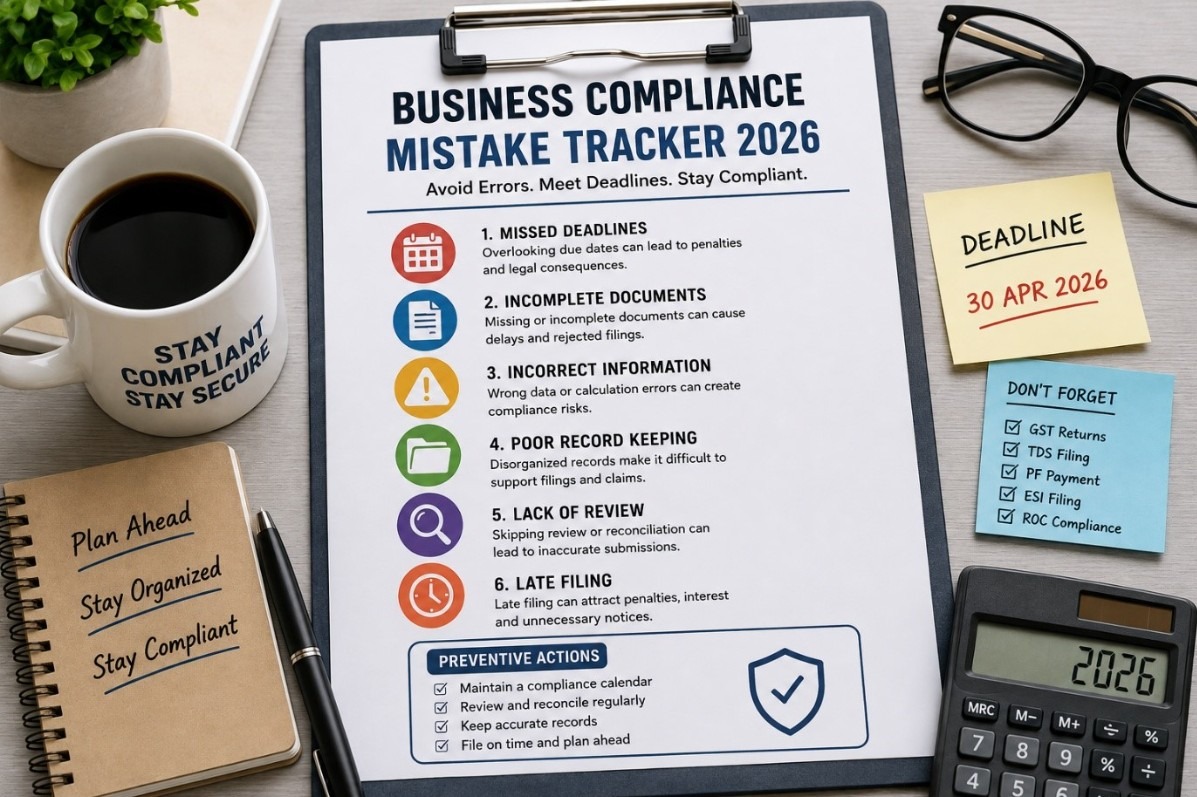
For many businesses, compliance mistakes rarely start as deliberate violations. More often, they are the result of a series of minor errors that accumulate and lead to issues down the track. A simple late filing or incomplete document or record can trigger a long line of unnecessary stress for businesses in 2026. However, there are a number of common mistakes that contribute to these errors.
10 Common Business Compliance Mistakes are as follows:
Scattering reminders, notes and due dates around multiple places can add to the risk that a small mistake leads to a big compliance catastrophe.
Preventive Action: Create a central compliance calendar. This would help in knowing where to look for each compliance-related requirement or deadline. A good starting point is to note applicable deadlines, renews and the regular ongoing requirements and then set a reminder before the due date.
Starting the filing too close to or on the due date can end up being unproductive and counter-intuitive to the aim of filing.
Preventive Action: Set an internal submission/deadline that precedes the actual due date. Finishing early on a submission window allows addressing any mistakes or last-minute issues that may arise.
Putting off the bookkeeping process for the entire month, quarter or year can cause problems, especially if one is looking to find any bill, claim, expense or invoice.
Preventive Action: Updating financial records on a regular basis. Sales figures, expenses, invoice tracking and payment reminders should form part of the regular recordkeeping schedule rather than a last minute or monthly process.
Filing on time does not guarantee correct submission. In fact, incorrect figures, missing and out-of-date records can all cause compliance issues for businesses.
Preventive Action: Verifying figures and information against supporting and relevant financial records and documents prior to submission, especially when cross-submission platforms are in use.
The occasional bank reconciliation discrepancies arise; however, it is good to investigate the source of these differences and ensure consistency in records prior to submission unless otherwise instructed.
Preventive Action: Regular, and preferably monthly, reconciliation of financial records against relevant supporting documents. Any discrepancy identified should be investigated before submitting the records or using the figures for compliance reports.
One of the most common compliance mistakes is to rely on a generic business compliance list, which does not take into account the nuances of one’s own business.
Preventive Action: A tailored checklist reflecting one’s own business compliance requirements. It is also important to update this list if there is a major change to the nature of the business, especially one that impacts compliance obligations.
As businesses grow, compliance processes tend to be the responsibility of more than one person, and mistakes are more likely to arise where it is unclear who is responsible for a certain process.
Preventive Action: Set out clearly the responsibilities for each compliance obligation. All those involved in the process should know who is responsible and what the expected outcome is.
When it comes to compliance, businesses can easily focus too much on their tax filings and statutory requirements and forget the other obligations, such as licences and registration.
Preventive Action: Adding all relevant registration or licence due dates to the compliance tracker to serve as a constant reminder.
As organisations grow, the requirements that they face change; therefore, it is necessary to ensure that the compliance tools and techniques in use reflect the latest requirements.
Preventive Action: Reviewing the compliance process, both annually and especially after major changes take place to align it with the current requirements of the business.
It is not enough to simply fix the mistakes. Rather businesses need to review them and ensure that there is no weakness in their system or process that can be exploited.
Preventive Action: Maintaining a record of all relevant mistakes that were made in the course of doing business. After addressing the root cause or correcting the error, examine the system to see what can be improved to prevent the same one from happening again.
CONCLUSION:
Managing compliance processes is not just about completing the requirements prior to a due date. Rather, it is an investment in systems and tools that can help businesses identify potential issues and respond appropriately. There are simple ways through which all businesses can easily avoid common compliance mistakes. A single missed filing or incorrect submission can easily become the result of a small problem that is overlooked. Tracking records, responsibilities and the history of errors in a simple tracker is a useful way for businesses to stay ahead of these pitfalls. The greatest approach in 2026 is to look at compliance management as a tool and an on-going function in all aspects of the business. A well-structured tracker can help businesses take the guesswork out of compliance management and stay aware at all times of the potential issues.
Frequently Asked Questions
What are the most common business compliance mistakes in 2026?
Common mistakes include missing deadlines, starting filings too late, keeping incomplete financial records, submitting incorrect information, failing to reconcile records, overlooking licence renewals, unclear responsibilities, and using outdated compliance processes.
Why is it important to maintain a central business compliance calendar?
A central business compliance calendar keeps important deadlines, renewal dates, filing requirements, and reminders in one place. This makes it easier for businesses to monitor obligations and reduce the risk of missed deadlines.
How can businesses avoid missing important business compliance deadlines?
Businesses can use a central business compliance calendar or tracker and set reminders before each deadline. Setting internal deadlines earlier than official due dates also provides time to identify and correct problems.
What is Business Compliance and why is it important?
Business Compliance refers to following the legal, regulatory, financial, licensing, and other applicable requirements relevant to a business. Effective compliance helps businesses avoid preventable errors, penalties, disruptions, and unnecessary stress.
Why should businesses start their compliance filing process early?
Starting early gives businesses enough time to collect documents, verify information, correct errors, and deal with unexpected issues before the official deadline arrives.
How does regular financial recordkeeping help with compliance?
Regular recordkeeping keeps invoices, expenses, sales information, payments, and other financial documents organised and up to date. This makes it easier to prepare accurate compliance reports and locate supporting documents when needed.
Why should businesses verify information before submitting compliance documents?
Checking information before submission can help identify incorrect figures, missing information, outdated records, or inconsistencies. This reduces the likelihood of submitting inaccurate compliance information.
How often should businesses reconcile their financial records?
Monthly reconciliation is generally a useful practice for keeping records consistent and identifying discrepancies early. The appropriate frequency can vary depending on the size and nature of the business and its specific obligations.
Why should businesses have a tailored Business Compliance checklist?
Monthly reconciliation is generally a useful practice for keeping records consistent and identifying discrepancies early. The appropriate frequency can vary depending on the size and nature of the business and its specific obligations.
How can businesses avoid confusion over business compliance responsibilities?
Businesses should clearly assign each compliance task to a responsible person or team. Responsibilities, deadlines, expected outcomes, and review procedures should be documented so everyone understands their role.
Why are licence and registration deadlines important for businesses?
Licences and registrations can have specific renewal or reporting requirements. Missing these deadlines may interrupt business activities or create compliance problems, so they should be tracked alongside other important obligations.
How can outdated business compliance processes create problems for a business?
An outdated process may no longer reflect current requirements or changes within the business. Regular reviews help businesses identify processes that need to be updated and reduce the risk of relying on incorrect or obsolete procedures.
What should a business do after making a business compliance mistake?
The business should correct the error where possible, determine what caused it, document what happened, and review the relevant process. Addressing the root cause can help prevent the same mistake from happening again.
Can a business compliance tracker help businesses manage their obligations?
Yes. A compliance tracker can bring deadlines, responsibilities, renewal dates, records, and follow-up actions into one organised system. It can help businesses monitor upcoming tasks and reduce the risk of overlooked obligations.
How can businesses reduce the risk of repeated business compliance errors?
Businesses should maintain a record of previous errors, identify their root causes, improve the relevant processes, assign clear responsibilities, and regularly review their compliance system. This turns individual mistakes into opportunities to strengthen the overall process.
Citations & References
Income Tax Department, Government of India. Income Tax Department – Official Portal for Tax Filing and Compliance.
Goods and Services Tax Network (GSTN). GST Portal – Official Platform for GST Registration, Returns and Compliance.
https://www.gst.gov.in
Ministry of Corporate Affairs, Government of India. MCA Services and Information on Corporate and Statutory Compliance.
https://www.mca.gov.in
Central Board of Indirect Taxes and Customs (CBIC), Government of India. Official Information on GST Laws, Rules and Notifications.
https://www.cbic.gov.in
Transform Your Brand’s Engagement with India’s Youth
Drive massive brand engagement with 10 million+ college students across 3,000+ premier institutions, both online and offline. EvePaper is India’s leading youth marketing consultancy, connecting brands with the next generation of consumers through innovative, engagement-driven campaigns. Know More.
Mail us at [email protected]
Connect Your Brand with Gen-Z
Unlock high-impact youth marketing strategies with EvePaper.
Book Strategy Call