
India’s Current Account Swings Back Into Surplus
Published: August 31, 2026
Key Strategy Takeaways
- Strengthen marketing investments as improved economic stability can boost consumer confidence and spending.
- Focus on premium and value-added offerings if purchasing power shows signs of improvement.
- Expand into new domestic and international markets supported by a stronger external economic position.
- Emphasize trust, quality, and long-term value in brand messaging during periods of economic optimism.
- Use data-driven segmentation to identify consumer groups most likely to increase spending.
- Optimize pricing and promotional strategies based on evolving demand rather than relying heavily on discounts.
- Increase digital marketing and customer engagement to capture rising consumer interest.
- Monitor macroeconomic indicators and adjust marketing plans proactively as economic conditions evolve.
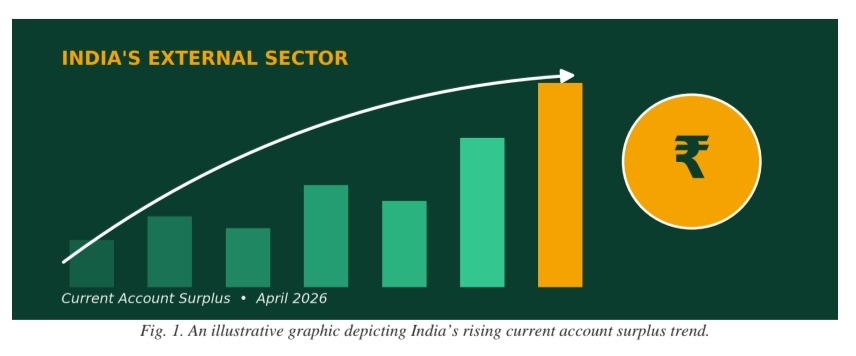
India’s external position can strengthen when exports of goods and services, remittances, and other foreign earnings exceed payments made to the rest of the world. A stronger external balance can support foreign-exchange reserves, improve investor sentiment, and provide greater resilience during periods of global financial uncertainty. Policymakers also monitor trade flows, oil prices, and capital movements to assess the sustainability of the country’s external position.
An improved balance of payments position can create a more stable environment for businesses and investors. Higher service exports, steady remittance inflows, and lower import costs can contribute to stronger foreign-exchange availability. However, global commodity prices, domestic demand, and changes in international trade can quickly influence the country’s external accounts, making continuous monitoring important for economic planning.
What is a Current Account Surplus?
The current account is a component of a country’s balance of payments and records trade
in goods and services, investment income, and transfers. A country has a current account
surplus when it receives more money from abroad than it pays to other countries.
India’s current account surplus implies that the value of Indian assets purchased abroad
was lower than the value of foreign assets purchased by Indians.
A healthy external balance can provide several advantages for the Indian economy. Strong service exports, robust remittances, and improved merchandise trade can increase foreign-exchange availability and reduce pressure on the domestic currency. This can also support macroeconomic stability by giving policymakers greater flexibility to manage external shocks and maintain confidence among global investors.
A healthy external balance can provide several advantages for the Indian economy. Strong service exports, robust remittances, and improved merchandise trade can increase foreign-exchange availability and reduce pressure on the domestic currency. This can also support macroeconomic stability by giving policymakers greater flexibility to manage external shocks and maintain confidence among global investors.
What Were the Factors Responsible for Improving India’s External
Position?
India’s current account surplus was mainly due to the following reasons:
India’s Services Trade Surplus India’s software and consultancy services are among the fastest-growing sectors in the
Indian economy. India’s goods trade deficit was offset by a services sector surplus.
Import and Remittances Reduction
Indian imports were also down significantly in April 2026 compared to the same period
last year. Consequently, the current account surplus was augmented by a decrease in the
merchandise trade deficit. In April 2026 the import of non-essential goods declined, and
the fall in oil prices also contributed to the current account surplus.
India’s External Position Improved More Than Expected in April 2026
India’s current account surplus of USD 4.7 billion in April 2026 was much higher than
expected. It means that India’s external position has improved to a surprising extent
compared to where it was a year ago.
India’s external position was weak last year as India had a current account deficit. The
turnaround in just one year is nothing short of stunning, but India’s current account surplus
does not tell the whole story. India has had current account deficits on many occasions in
the past because India has been unable to balance its imports and exports for a long time.
Is Rupee Set to Appreciate After Registering a Surplus?
The current account surplus is generally positive for the rupee because it reflects demand
for the Indian currency in foreign exchange markets. However, it is important to note that
the value of the rupee depends on various factors, including interest rates, inflation, and the
overall health of the economy. Although the current account surplus usually improves the
value of a country’s currency, it is not the only determinant of currency value.
What Are the Implications of India’s Current Account Surplus for
Investors?
India’s current account surplus is generally good news for investors because it means that
India can easily pay off its foreign debts. In other words, a current account surplus reduces
the likelihood that a country will default on its foreign obligations. Moreover, the current account surplus is generally positive for the local currency (INR).
The improvement in the value of the INR, in turn, benefits investors who have purchased
equity in Indian entities.
However, just as mentioned above, India’s current account surplus is not always a good
indicator of the health of the economy. India has in the past recorded huge current account
deficits, which is detrimental to the economy. As such, investors should conduct extensive
research before investing in India.
Conclusion
India’s current account surplus of USD 4.7 billion in April 2026 is a sure indication of the
stability and strength of the Indian economy. The current account surplus was mainly due
to huge exports and remittances and a reduction in imports. Even though a current account
surplus is generally a positive attribute for any economy, it is important to remember that it
is not always an indicator of how healthy an economy is.
India has had several episodes of current account deficits in the past. As such, investors
should be wary of the risks associated with current account surpluses before making any
investment decisions in India.
Reserve Bank of India (RBI) — Useful for India’s balance of payments, external sector, foreign-exchange reserves, and current account data. RBI – Database on Indian Economy — Helpful for current account, trade, remittances, and external-sector statistics. Ministry of Commerce & Industry — Relevant for India’s exports, imports, and international trade data. International Monetary Fund (IMF) — Provides global data and analysis on current accounts, balance of payments, and external stability. World Bank — Useful for macroeconomic and external-sector indicators.
Frequently Asked Questions
What is a current account surplus?
A current account surplus occurs when a country earns more from exports of goods and services, remittances, and investment income than it spends on imports and payments to other countries.
Why is India’s current account surplus important?
It indicates a stronger external financial position, supports economic stability, and can strengthen investor confidence in the Indian economy.
It indicates a stronger external financial position, supports economic stability, and can strengthen investor confidence in the Indian economy.
The surplus was mainly driven by strong services exports, robust remittances from overseas Indians, and a favorable balance in external transactions.
How does a current account surplus affect businesses?
Businesses may benefit from improved economic confidence, increased investment, greater market stability, and stronger demand for products and services.
How can marketers benefit from this economic development?
Marketers can capitalize on rising consumer confidence by investing in brand building, expanding into new markets, launching premium products, and strengthening digital marketing efforts.
Does a current account surplus guarantee economic growth?
No. While it is a positive indicator of external strength, overall economic growth also depends on factors such as domestic consumption, investment, inflation, and government policies.
How can consumers be affected by a current account surplus?
Consumers may experience greater economic confidence, better employment opportunities, and potentially more stable prices if the broader economy remains strong.
Citations & References
References
[1] Reserve Bank of India, “Developments in India’s Balance of Payments during
April 2026 (Preliminary Data),” Press Release, Jun. 15, 2026.
[2] Business Standard, “India saw $4.7 billion current account surplus in April:
RBI data,” Jun. 15, 2026. [Online]. Available: business-standard.com.
[3] ANI, “India’s current account surplus reaches $4.7 billion, foreign portfolio
outflows lead to BoP deficit in April: RBI Data,” Jun. 15, 2026. [Online].
Available: aninews.in.
Drive massive brand engagement with 10 million+ college students across 3,000+ premier institutions, both online and offline. EvePaper is India’s leading youth marketing consultancy, connecting brands with the next generation of consumers through innovative, engagement-driven campaigns. Know More.
Mail us at [email protected]
Connect Your Brand with Gen-Z
Unlock high-impact youth marketing strategies with EvePaper.
Book Strategy Call