
Surviving the Noise: Practical Hostel Hacks for Better Sleep
Published: October 18, 2026
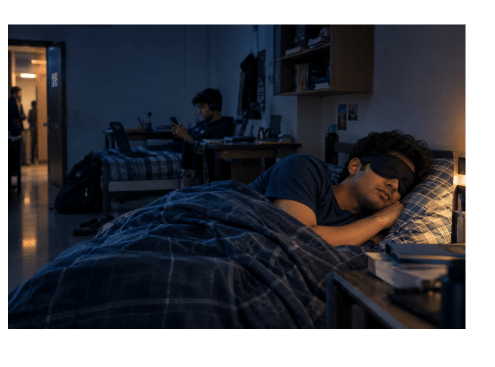
Abstract: Improving hostel sleep quality in the face of social interactions, phone calls, slamming doors, and roommates who have seemingly no regard for your need to rest represents an ongoing struggle for sleep-deprived students. This paper discusses the reasons why hostel noise impacts sleep, the effects of various disturbances on rest, and the possible solutions to these issues. Each proposed method aims to create a more relaxing environment, allow the person to fall asleep faster and stay asleep longer, or help them avoid waking up if they do. The information presented can be used to choose a hostel, adapt personal habits, and improve a student’s sleep environment regardless of their roommate situation.
Introduction: When Your Hostel Room Never Goes Quiet
It is 1:30 a. m., and you have a test tomorrow; you finally closed your phone and were about to take a nice nap when someone decided to organize a video conference. One of your roommates turns off his headphones to watch some funny reels, and someone decides to slam the door at the end of the hallway. You quickly turn to your left, cover your head with a blanket, and wait for it to end. It always ends after five minutes. The five minutes are over, and the noisy adventure has just begun.
If you have ever been in a hostel, you know what I am talking about. You cannot really ask your roommates not to be loud because you share a room, and it is impossible to have full control over someone else’s lifestyle. One of you wants to sleep at 10 pm, but the other one gets back from the library at midnight and loudly texts his girlfriend. Another one simply cannot watch a football match before going to bed, so he decides to discuss the game with you at 2:00 a. m.
When the quality of sleep is disturbed, the next day you feel tired, grumpy, and unfocused, making you underprepared for the daily dose of college stress. The good news is that you do not need to move to a quieter hostel and invest in a personal room to have a proper rest. Several simple solutions may fix most of the problems you encounter on your path to a peaceful night’s sleep.
Why Is Sleeping in a Hostel So Difficult?
Different schedules, one room
One of the biggest problems about hostel life is that everyone has their own routine. The student who has to prepare for his competitive exams will have a habit of sleeping early and getting up at 5 in the morning. Meanwhile, someone else will be studying at night since that’s the only time that he gets a moment’s peace.
Now, both of these habits aren’t inherently bad. It all comes down to how they affect every other person sharing the room.
Simple things like opening a cupboard, rummaging through it for your charger, or switching on the main switch of the room could be quite distracting when you are trying to fall asleep. All of these things can potentially ruin your sleep if they happen multiple times at night.
Sound travels farther than you’d expect
Hostel building is usually constructed with tiled floors, concrete walls, washroom, and doors. This construction material absorbs very little sound, thereby allowing sound to reflect off these surfaces creating echoes.
A room adjacent to the stairwell, common room, washroom, or main entrance will tend to be louder than a room at the end of a corridor. In addition, your roommates can never be quiet enough if their room is next to yours, and their sounds can reach your bed through doorways.
Sounds generated by a bass, or a motor can also be challenging to exclude since they have an extremely low pitch and can travel through different materials and distances before reaching you.
Stress makes the problem worse
There is also another problem that is not discussed often enough – the fear of sleep can cause trouble sleeping.
You hear a noise and check the clock and realize that you only have six hours to sleep before your alarm clock wakes you up. You check the clock again ten minutes later and start to think how tired you will be during your first lecture.
That means being annoyed and more awake, which makes it harder to fall asleep. It would help if you concentrated less on how annoying it was and focused more on calming down and reducing the chance that the sound would bother you again.
Understanding the Types of Hostel Noise
Not every sound requires the same solution. Identifying what’s disturbing you is a useful first step.
Human noise
Conversations, laughter, telephone rings, video and game sounds are examples of disturbances. The main problem may not be the volume, since human speech has varying intensities, recognizable patterns, and sudden surprises that are attention grabbing.
A constant volume may be turned down or tuned out after some time, but interesting speech patterns will keep your brain active even when you are trying not to listen
For this type of disturbance, headphones for the speaker, agreed upon quiet times, and specialized ear plugs, may be more effective than just closing a window.
Sudden sounds
A cupboard door, a falling bottle, a ringing notification, or a person coming back at night can interrupt the process of falling asleep. Unwanted ringing sounds are the worst because they can be unpredictable.
You can’t ask all people to stop moving when it’s time to sleep, and you shouldn’t have to. However, there are a few simple arrangements that can be made to make this transition less difficult. Keeping things within reach that are used frequently, putting keys and bottles on something soft, and not getting any unwanted notifications can help.
Environmental noise
Traffic, construction, barking dogs, generators, and hostel ventilation systems are some other sounds that fall into a different category. They can often be long-lasting and sometimes completely out of your control.
Closing windows may help if outside noises are the issue (and this depends on ventilation, temperature, and the building’s construction), but heavy curtains are a poor solution that only dampens higher frequencies, so it’s best to avoid them and opt for standard sound insulation.
And in a situation where several of these annoyances are present, it’s best to use a combination of solutions, as using one perfect method would be ineffective.
What Works: Hostel Sleep Hacks Worth Trying
1. Make earplugs your first line of defence
Foam earplugs are among the simplest and most affordable means of protecting one’s hearing in a noisy environment such as a hostel. Small and easily portable, they require no electricity or internet to function.
The most crucial guideline when using them is the proper insertion into the ear canal. Most foam earplugs should be rolled into a small cylinder, inserted into the ear according to the manufacturer’s instructions, and held there until they expand. A wrongly inserted earplug will provide far less noise reduction than promised by the manufacturer. It is vital to choose the right size, clean the earplugs as recommended, and not to insert them too far into the ear canal. Reusable earplugs require special cleaning.
One should remember that earplugs will rarely provide total noise isolation and privacy. They should be used to reduce the pitch of unpleasant sounds like voices of other people or the noise of the corridor. A reasonable alarm clock should be available in any case as earplugs often prevent one from hearing any sound at all, including a fire alarm or other emergency warnings. One should test a particular brand of earplugs for their ability to allow hearing an alarm if one is used to setting an alarm for waking up in the morning. In such a case, one might want to consider using a vibrating alarm or another type of notification.
2. Try steady background sound
It does sound counterintuitive. Isn’t noise supposed to drown out noise?
Actually,
using a consistent, relatively quiet, sound can help eliminate unwanted and unpredictable noises that might interrupt sleep.
A fan, white noise machine, or even a familiar song can help some people relax enough to fall asleep.
White noise is composed of sounds across a wide frequency spectrum; other noises- including pink noise and nature sounds -can also aid in relaxation, though they often take further trial and error to identify which, if any, sounds are beneficial.
Some people may already have access to something that can provide the desired effect;
a smartphone application or existing fan may work well enough as long as the produced sound is not overly loud or close to the sleeping person. The application itself should not be touching the phone’s pillow if it has to be used, and extra caution should be used to ensure the phone does not charge improperly, and that the music is not played at excessively high volumes throughout the night.
After all,
the point is to not annoy your bed partners as much as it is to mask more undesirable noises in the environment.
3. Choose your bed strategically
If you are still torn between several options, make sure to pay attention to the room’s layout. A bed facing the hallway may be uncomfortable due to the constant flow of people and the lights switching on and off throughout the night.
A bed further from the entrance, not necessarily against the shared bathroom wall, or near a noisy window, could provide a better night’s sleep, depending on the source of the disturbance.
You can also make sure that there aren’t any personal belongings that could cause a disturbance to you at night. Try not to put your phone under your pillow, but instead, on a shelf or table nearby. Place things within your reach so you do not have to look through your bag or suitcase at night. Limit the amount of clutter you have, especially around your bed.
You may not be able to change the entire layout of the hostel room, but a slightly more comfortable sleep position could be enough to make up for a night of restful sleep.
4. Agree on quiet hours with your roommates
This is undoubtedly the most underrated solution as it requires communication instead of shopping.
A simple conversation can prevent multiple arguments. You could suggest that everyone keeps the room silent after 11 pm, asks to use headphones if they are going to watch videos or make calls, and use a small lamp when studying late at night.
You should be very specific about what you are asking for. Instead of saying, “You people are so loud,” you could say, “I have been having a hard time sleeping because of your phone calls after midnight. I suggest that you switch to using headphones and leave the room once it is past 11.”
You should make sure to give them a reasonable task; otherwise, you will always be having conflicts.
Also, you should make sure to consider others’ schedules, avoid setting off loud alarms if possible, and keep your own late-night activities to a minimum.
If multiple conversations do not solve the problem, ask if the hostel has a warden, a resident adviser, or a policy about the quiet hours in the building. You do not always have to complain about everything, but you also shouldn’t accept disruptive noises in a shared room during your college life.
5. Control light as well as sound
Noise is the primary source of disturbance, but it is not the only one – light can also be disruptive. A bright lamp, the glow from your phone screen, or a roommate studying nearby can interfere with the quality of your sleep if you share a room.
A cheap solution to this problem is an eye mask – buy the softest and comfiest one you can find so that it does not press too hard against your eyes.
If the issue is a roommate studying at night, a tiny desk lamp facing their workspace is the best solution. Alternatively, you might ask them to turn off the overhead light at a specific time and use a personal lamp in the meantime.
To create the perfect environment for sleep, avoid bright lighting in the last hour or so before bedtime.
6. Build a routine that survives hostel life
A perfect bedtime routine is hard to maintain if you have a roommate with a different schedule than you, the mess doesn’t have dinner ready until late, or college work continues piling up. It’s best to be consistent rather than perfect.
Pick a time that will give you sufficient sleep before your wake-up time. The average adult should get about seven to nine hours of sleep each night, though it can vary for some individuals. If you are still in your teenage years, you may need a bit more.
Try to start winding down about 30 minutes before you plan to sleep. Finish any conversations, put your phone on do not disturb, lay out your clothes, and avoid starting a particularly difficult project right before you plan to sleep.
Your body will begin to associate a routine with going to bed. It may be easier to fall asleep if you keep to roughly the same schedule every night, even if the silence of the hostel doesn’t last as long as you’d like.
7. Protect your sleep from your phone
A phone can be both a blessing and a curse. An alert can turn into a text, the text can turn into a video, which turns into 40 minutes of wasted time that you didn’t intend to spend staring at a screen at 2am.
The simplest solution to mindless nighttime screen time is making it less accessible.
Enable Do Not Disturb to silence alerts and unimportant notifications, and put your phone out of immediate reach. If you need to set it as an alarm, place it on a firm surface instead of using it while lying in bed.
This doesn’t mean that you have to ban every screen from your bedtime hours. Just don’t make dozing off a habit.
Common Pitfalls: Why Hostel Sleep Hacks Sometimes Fail
Expecting earplugs to block everything
A student buys high-rated earplugs, puts them in, and expects the room to become completely silent. When bass from a nearby speaker still comes through, the product seems useless.
The issue is that advertised noise-reduction ratings are measured under specific conditions, and real-world performance depends on fit and the type of sound. Earplugs reduce noise; they don’t create a soundproof bubble.
If one solution isn’t enough, combine reasonable measures. Use properly fitted earplugs, request lower speaker volume, and consider moving your bed away from the main source.
Turning white noise up too high
Background sound can help, but setting the volume extremely high creates another problem. Loud audio may disturb your own sleep or expose your hearing to unnecessary sound.
Start at a low, comfortable level. You should be able to relax without feeling that the sound is competing aggressively with the room. If you’re tempted to keep increasing the volume, address the source of the disturbance where possible.
Treating every roommate as the enemy
Imagine a student named Rahul who has an 8 a.m. lecture and needs to sleep early. His roommate, Aman, returns from the library at midnight and begins a phone call. Rahul gets angry, complains loudly, and the argument wakes everyone else.
The original problem was noise, but now the room has a relationship problem too.
A calm discussion during the daytime would probably work better. Explain what you need, listen to the other person’s routine, and agree on a practical compromise. If the behaviour continues despite reasonable requests, involve the appropriate hostel authority.
Being considerate doesn’t mean staying silent about a genuine problem.
Relying on caffeine to repair bad sleep
When sleep is poor, coffee and energy drinks can feel like the obvious answer. They may temporarily improve alertness, but they don’t replace the benefits of adequate sleep.
Caffeine can also stay in your system for hours, making it harder to fall asleep later. If you’re sensitive to it, even an afternoon coffee may affect your night.
Try moving caffeine earlier in the day, especially when you’ve already had a difficult night. And don’t assume that feeling energetic after a drink means you’ve fully recovered from sleep loss.
Ignoring persistent sleep problems
Sometimes the hostel isn’t the only issue. If you regularly struggle to fall asleep even when the room is quiet, wake up feeling unrefreshed, or experience significant daytime sleepiness, there may be more going on than environmental noise.
Persistent insomnia, loud snoring with pauses in breathing, or severe daytime fatigue deserves medical attention. Don’t try to solve every sleep problem by buying another gadget or forcing yourself to follow a stricter routine.
A Practical Seven-Night Framework for Better Hostel Sleep
You don’t need to change everything tonight. In fact, trying six new habits at once can make it difficult to figure out what’s helping. A simple one-week experiment is more manageable.
Nights 1 and 2: Identify the real problem
Before buying anything, notice what actually wakes you up. Is it conversations, traffic, bright lights, your phone, or repeated interruptions from a roommate?
Write down the approximate time, the source, and how you felt the next morning. You don’t need a complicated sleep-tracking app. A few notes on your phone will do.
Also, establish a realistic bedtime and wake-up time that allows enough sleep.
Nights 3 and 4: Fix the easiest things
Move your bed away from the noisiest area if you can. Prepare your belongings before bedtime, switch on Do Not Disturb, and try an eye mask if light is a problem.
If human noise is the main issue, test properly fitted earplugs or a low-volume background sound. Change one or two things at a time so you can tell whether they’re useful.
Night 5: Talk to your roommates
Choose a calm moment, not the middle of a frustrating night. Suggest a reasonable quiet period and explain what you’d like everyone to do differently.
Keep the agreement realistic. Headphones for videos, quieter calls after a certain hour, and avoiding unnecessary overhead lights are good starting points.
Night 6: Review what changed
Ask yourself three questions: Did I fall asleep more easily? Did I wake up less often? Did I feel better during the day?
A sleep diary can help reveal patterns, although a few nights won’t prove that a particular habit caused an improvement. Some variation is normal.
Keep the changes that help, adjust those that don’t, and avoid spending money on solutions that haven’t addressed your actual problem.
Night 7: Build your personal sleep setup
By the end of the week, aim to have a basic system you can repeat.
Your setup might include earplugs, an eye mask, a comfortable bed position, a phone on Do Not Disturb, and an agreed quiet period. Someone else might benefit more from a fan, an earlier caffeine cut-off, or a conversation with the hostel warden.
The best routine is the one that works in your actual room, with your actual roommates, on an ordinary college night.
Conclusion: Better Sleep Doesn’t Require a Perfect Hostel
Hostel life is seldom serene, monotonous, and predictable. There will always be rowdy conversations at odd hours that keep you awake. Sometimes your friends will just decide to go to bed at a different time than you. However, you need not sacrifice sleep for the sake of others. Find the most distracting element of your environment, make a few changes to your behavior, and politely ask those who bother you to respect your sleeping schedule. In a matter of nights, you will notice a considerable difference in the quality of your rest.
Eco-Friendly Hostel Hacks: 20 FAQs, 20 Key Takeaways, and One Core Marketing Question
Primary SEO keyword: eco-friendly hostel hacks
Based on your article, Surviving the Noise: Practical Hostel Hacks for Better Sleep, the following FAQs and key takeaways connect better sleep, shared-room etiquette, energy conservation, and affordable sustainable habits. The keyword “eco-friendly hostel hacks” is integrated naturally to support SEO while keeping the content relevant to students.
1. Frequently Asked Questions (20 FAQs)
Writing
FAQs About Eco-Friendly Hostel Hacks and Better Sleep
1. What are eco-friendly hostel hacks?
Eco-friendly hostel hacks are simple, sustainable practices that help students reduce waste, conserve electricity and water, and make shared living spaces more comfortable. Examples include switching off unused lights, using existing belongings for longer, and reducing unnecessary purchases.
2. How can eco-friendly hostel hacks improve sleep quality?
They can help create a more comfortable sleeping environment by reducing unnecessary light, avoiding disruptive appliance use, organizing belongings before bedtime, and encouraging roommates to follow quiet hours. Better sleep also depends on consistent routines and adequate rest.
3. How can I sleep better in a noisy hostel?
Identify the main source of noise, try properly fitted earplugs if suitable, use a comfortable eye mask for light disturbances, and discuss quiet hours with your roommates. A low-volume background sound may also help some people, provided it does not disturb others.
4. What are the best affordable hostel sleep hacks for students?
Prepare your belongings before bedtime, enable Do Not Disturb on your phone, maintain a regular sleep schedule, use an eye mask if needed, and establish reasonable quiet hours. These habits can improve your sleeping environment without requiring expensive products.
5. How can students save electricity in hostel rooms?
Switch off unnecessary lights and appliances, make use of natural daylight, use personal lamps instead of bright overhead lighting when practical, and avoid running air conditioning in empty rooms. Choose energy-saving habits that do not compromise safety or comfort.
6. Can I use a fan or white noise to sleep better in a hostel?
Yes. A fan or low-volume white noise may help mask unpredictable sounds for some people. Keep the volume comfortable, avoid disturbing roommates, and use electrical equipment according to its safety instructions.
7. How can I reduce noise without disturbing my roommates?
Use properly fitted earplugs, position your bed away from common noise sources if possible, silence unnecessary notifications, and agree on quiet hours. If you use background audio, keep it low and avoid playing it through speakers in a shared room.
8. How can I make my hostel room more comfortable without spending money?
Rearrange your belongings, reduce clutter around your bed, use existing storage containers, prepare clothes and study materials before bedtime, and coordinate sleeping arrangements with roommates. Small changes can make a shared room easier to manage.
9. How can roommates maintain quiet hours in a hostel?
Discuss everyone’s schedules and agree on a realistic quiet period. Encourage headphone use, lower phone volumes, quieter movements at night, and personal lamps for late-night study sessions.
10. What are some eco-friendly alternatives to buying new hostel products?
Reuse suitable containers for storage, repair damaged belongings, use existing bottles and bags, and borrow or share supplies when everyone agrees. Before buying a new product, consider whether something you already own can serve the same purpose.
11. How can I reduce phone distractions before sleeping?
Enable Do Not Disturb, silence unnecessary notifications, place your phone on a nearby table instead of keeping it in your hands, and avoid scrolling when you intend to sleep. If you use your phone as an alarm, make sure you can still hear or feel the alarm reliably.
12. How much sleep should college students aim for?
Most adults should aim for seven to nine hours of sleep per night. Teenagers generally need eight to ten hours. Individual needs vary, but a consistent routine and sufficient sleep are important for concentration, mood, and daily functioning.
13. Do earplugs completely block hostel noise?
No. Earplugs can reduce noise when used correctly, but they rarely eliminate every sound, particularly low-frequency noise. Follow the manufacturer’s instructions, keep reusable earplugs clean, and ensure you have a reliable way to respond to alarms and emergency warnings.
14. How can I reduce light disturbances in a shared hostel room?
Use an eye mask if comfortable, dim your phone screen before bedtime, and ask roommates to use small desk lamps rather than bright overhead lights when appropriate. Positioning your bed away from direct light can also help.
15. How can students avoid wasting money on hostel sleep products?
Identify the main cause of your sleep disturbance before buying anything. Try free solutions first, such as changing your routine, rearranging your belongings, and discussing quiet hours. Purchase only items that address a genuine need.
16. Does drinking coffee help recover from poor hostel sleep?
Coffee may temporarily improve alertness, but it cannot replace adequate sleep. Caffeine can also make it harder to fall asleep later, so consider limiting it in the afternoon and evening, particularly if you are sensitive to its effects.
17. How can I handle a roommate who makes noise late at night?
Talk to your roommate at a calm time and explain the specific problem. Suggest practical changes, such as using headphones or moving phone calls outside the room when permitted. If repeated disturbances continue, seek help from the hostel warden.
18. What should I do if hostel noise regularly affects my health or studies?
Keep a record of recurring disturbances, discuss reasonable solutions with your roommates, and contact the hostel warden or appropriate college authorities if the problem persists. If sleep difficulties continue even in a quiet environment, consider consulting a healthcare professional.
19. How can I follow sustainable habits without affecting my comfort?
Choose practical habits that fit your circumstances. Switch off unused appliances, reuse belongings, reduce waste, and conserve water without compromising adequate ventilation, personal hygiene, safety, or sufficient sleep.
20. How can I build better hostel habits in seven days?
Spend the first two nights identifying your main sleep disturbances. Make simple changes on nights three and four, discuss quiet hours on night five, review the results on night six, and develop a repeatable routine on night seven. Keep the changes that work for your room and schedule.
2. Key Takeaways (20 Points)
Writing
20 Key Takeaways: Eco-Friendly Hostel Hacks for Better Sleep
- Identify the source of noise: Determine whether conversations, traffic, doors, notifications, or other sounds are disturbing your sleep.
- Use earplugs correctly: Properly fitted earplugs can reduce disruptive noise, although they cannot eliminate every sound.
- Keep background sound comfortable: A fan or low-volume white noise may help mask sudden disturbances without creating additional noise pollution.
- Choose your bed position wisely: Move away from noisy entrances, busy corridors, or other disturbance sources when the room layout allows.
- Agree on quiet hours: Discuss realistic expectations for calls, videos, lights, and late-night activities with your roommates.
- Use headphones for entertainment: Encourage everyone to use headphones rather than playing videos or music aloud at night.
- Reduce unnecessary lighting: Use natural daylight during the day and a suitable personal lamp for late-night study sessions.
- Try an eye mask: A comfortable eye mask can help reduce light disturbances without requiring changes to the entire room.
- Organize belongings before bed: Keep frequently used items within reach to avoid rummaging through bags and cupboards at night.
- Silence unnecessary notifications: Do Not Disturb settings can reduce interruptions from calls, messages, and applications.
- Maintain a consistent sleep routine: Aim for regular sleeping and waking times while allowing enough time for adequate rest.
- Limit late caffeine consumption: Avoid relying on coffee or energy drinks to compensate for repeated sleep loss.
- Switch off unused appliances: Reduce unnecessary electricity use without compromising ventilation, comfort, or safety.
- Reuse existing belongings: Make use of current bottles, bags, containers, and storage solutions instead of buying replacements unnecessarily.
- Avoid impulse purchases: Test free or inexpensive solutions before investing in sleep accessories or other hostel products.
- Respect shared-room needs: Sustainable and peaceful living depends on balancing individual comfort with consideration for roommates.
- Address conflicts calmly: Explain how specific behaviours affect your sleep and request practical changes instead of blaming others.
- Seek help when needed: Contact hostel management about persistent disturbances, harassment, or unsafe conditions.
- Track your sleep improvements: Note bedtime, disturbances, awakenings, and daytime tiredness to identify useful patterns.
- Build habits gradually: Test a few changes over a week and maintain the ones that improve comfort, reduce waste, and fit your lifestyle.
3. One Core Marketing Question
Writing
How can eco-friendly hostel hacks help college students sleep better, reduce everyday waste, save money, and create a more comfortable shared living environment without expensive products or major lifestyle changes?
This marketing question connects the primary keyword “eco-friendly hostel hacks” with the central benefits of your article: better sleep, reduced energy waste, affordable solutions, and peaceful coexistence with roommates.
Connect Your Brand with Gen-Z
Unlock high-impact youth marketing strategies with EvePaper.
Book Strategy Call