
Rural employment programs: Creating income opportunities
Published: June 23, 2026
Key Strategy Takeaways
- Creates income opportunities for rural households through employment schemes.
- Reduces poverty by providing stable and regular sources of income.
- Minimizes rural-to-urban migration by generating local employment.
- Strengthens local economies through increased spending and market activity.
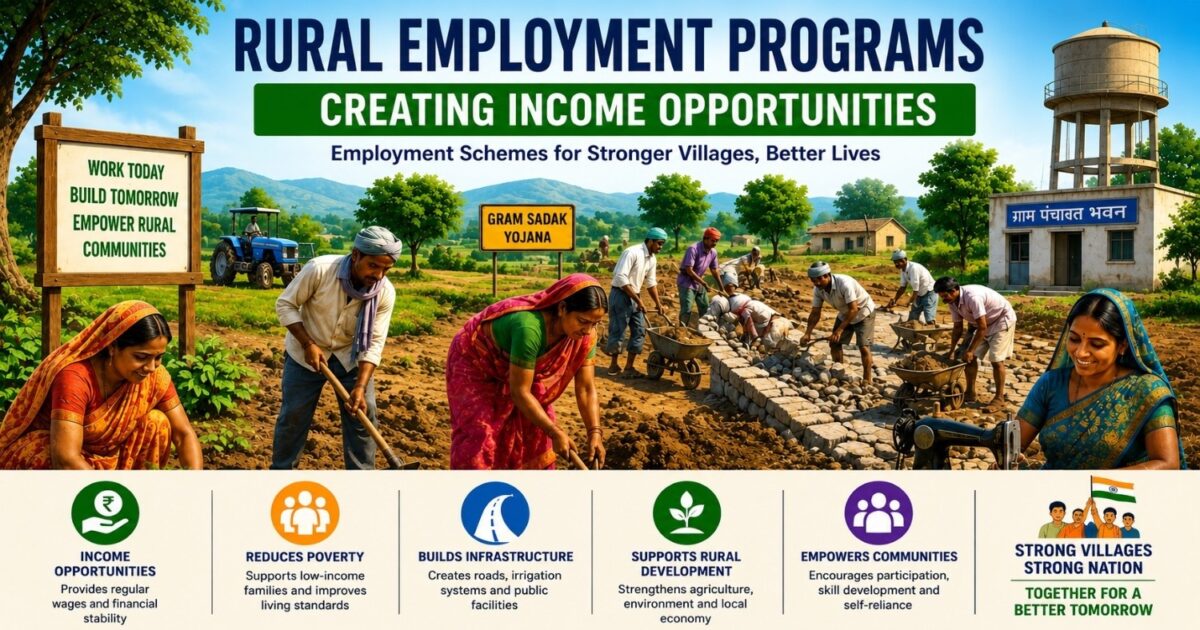
- Improves rural infrastructure, including roads, irrigation systems, and public facilities.
- Enhances agricultural productivity through development and support projects.
- Promotes environmental conservation through afforestation and water management initiatives.
- Encourages inclusive economic growth by reducing regional inequalities.
- Supports sustainable livelihoods through skill development and training programs.
- Highlights the importance of transparency, funding, and effective implementation for program success.
Meta Description:
Explore how employment schemes and rural development programs create income opportunities, reduce poverty, and improve livelihoods in rural communities.
Introduction:
Rural jobs have enabled the enhancement of the economic situation of the rural people in villages/rural areas. In developing countries, agricultural activities are insufficient to guarantee farmers’ incomes for the year to come. To this end, governments put in place policies to create employment, alleviate poverty and boost the rural economy through employment schemes and rural development programs. They are critical in mitigating destitute income groups and lessening movements from rural to urban areas. Urban and rural development policies focus on increasing employment schemes, highlighting the need for inclusive economic growth that benefits all segments of society.
Rural Employment Programs: programs that offer temporary and/or long-term work programs in rural areas by the government. The initiatives typically involve infrastructure development, agricultural assistance, environmental conservation, and community development efforts.
Common activities in the countryside are:
Importance of employment schemes:
Employment schemes are crucial in giving rural families a financial buffer in times of lay-off or difficulties in farming.
Public employment schemes are noted as supporting the economic resilience of vulnerable communities.
Role of rural development in the development of the economy:
National economic development is closely related to rural development.
Challenges faced by rural employment programs:
Though they are beneficial, there are a number of problems with rural jobs.
Measures to improve employment schemes and rural development:
There are a number of measures governments and institutions can undertake to enhance rural employment systems.
- Skill development training: Giving vocational and technical education results in improving employability.
- Digital skills and awareness: Technology can be useful to rural workers in accessing information for government programs.
- Investment in infrastructure: Economic activity is enhanced by improved transport, electricity and internet services.
- Offer adequate and appropriate support for small businesses: Promoting entrepreneurship in the countryside helps to generate sustainable jobs.
The support of public-private partnership may also help to reinforce the rural development efforts.
Conclusion:
It is critical to have rural employment program and rural development programme for enabling enhancement of rural people livelihoods. Besides offering income generating opportunities, employment schemes also help in the development of infrastructure, poverty alleviation and economic stability. Balanced growth and the alleviation of inequalities between rural and urban areas, is promoted by strong rural development policies. Going forward, investments in employment schemes, education, and infrastructure will continue to be vital to the sustainable, self-reliant rural communities.
Frequently Asked Questions
What are rural employment programs?
Rural employment programs are government initiatives designed to provide job opportunities and income support to people living in rural areas
Why are employment schemes important for rural development?
Employment schemes reduce poverty, improve infrastructure, and support local economic growth in rural communities
How do rural employment programs reduce migration?
By creating local job opportunities, these programs reduce the need for rural populations to move to cities for work.
What challenges affect rural employment schemes?
Common challenges include limited funding, corruption, lack of awareness, and seasonal dependence on agriculture.
How can governments improve rural development programs?
Governments can improve rural development through skill training, better infrastructure, digital access, and stronger policy implementation.
Who can benefit from a rural employment scheme?
A rural employment scheme primarily benefits unemployed and low-income individuals, small farmers, landless laborers, and vulnerable households seeking stable income opportunities.
What types of work are provided under an employment scheme?
An employment scheme often includes activities such as road construction, irrigation projects, water conservation, afforestation, sanitation development, and other community infrastructure projects.
How does an employment scheme support local businesses?
An employment scheme increases household income, which boosts spending in local markets and creates demand for goods and services within rural communities.
Can an employment scheme contribute to environmental sustainability?
Yes, many employment scheme projects focus on environmental conservation through tree planting, soil improvement, watershed management, and water resource development.
How does technology improve the effectiveness of an employment scheme?
Technology helps an employment scheme by improving transparency, enabling digital payments, tracking project progress, and providing easier access to information for beneficiaries.
Citations & References
1. World Bank, “Rural Development Overview,” World Bank, 2024. [Online]. Available: World Bank Rural Development. [Accessed: May 9, 2026].
2.International Labour Organization, “Employment-Intensive Investment Programmes,” ILO, 2024. [Online]. Available: ILO Employment Programmes. [Accessed: May 9, 2026].
3.United Nations Development Programme, “Rural Development and Inclusive Growth,” UNDP, 2024. [Online]. Available: UNDP Rural Development. [Accessed: May 9, 2026].
4.Food and Agriculture Organization, “Rural Poverty Reduction and Employment,” FAO, 2024. [Online]. Available: FAO Rural Employment. [Accessed: May 9, 2026].
5.Ministry of Rural Development, “Mahatma Gandhi National Rural Employment Guarantee Act,” Government of India, 2024. [Online]. Available: MGNREGA Official Portal. [Accessed: May 9, 2026].
Transform Your Brand’s Engagement with India’s Youth
Drive massive brand engagement with 10 million+ college students across 3,000+ premier institutions, both online and offline. EvePaper is India’s leading youth marketing consultancy, connecting brands with the next generation of consumers through innovative, engagement-driven campaigns. Know More.
Mail us at [email protected]
Connect Your Brand with Gen-Z
Unlock high-impact youth marketing strategies with EvePaper.
Book Strategy Call