Green India: 7 Indian Policies for Renewable Energy Regulation
Published: July 8, 2026
Key Strategy Takeaways
- Early Milestone Achievement: India has reached its 2030 goal of 50% non-fossil fuel capacity five years ahead of schedule, driven by a shift from simple expansion to deep grid integration.
- Industrial Decarbonisation: New rules for Captive Power and Green Hydrogen now allow heavy industries (like steel and shipping) to maintain 24/7 green status by integrating battery storage and meeting strict carbon-intensity standards.
- Mandatory Compliance: The Renewable Consumption Obligation (RCO) makes green energy adoption a legal requirement for utilities and large consumers, enforcing a ~30% renewable mix for the current fiscal year through financial penalties.
- Democratisation of Energy: Policies like PM Surya Ghar and Green Energy Open Access have opened up renewable procurement for 10 million households and smaller commercial entities (100 kW+), bypassing traditional utility monopolies.
- Grid Stability and Security: The Draft NEP 2026 mandates long-term capacity planning to prevent blackouts, while the ALMM ensures a secure, domestic supply chain by prioritizing Indian-made components.
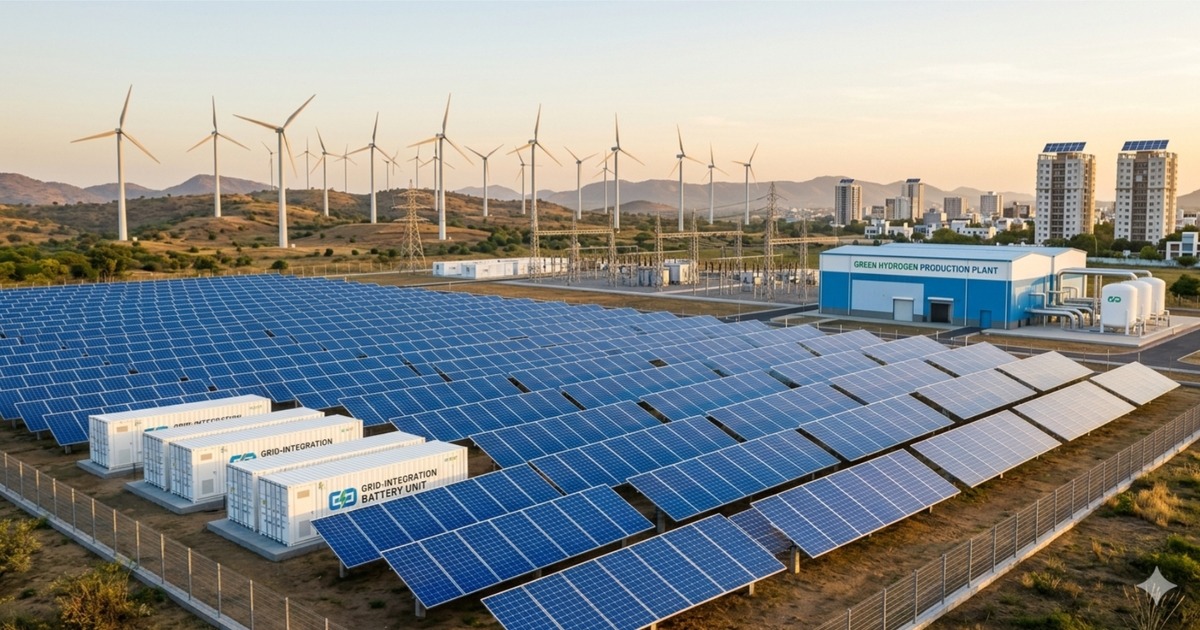
Climate change is no longer just an academic issue; it now shapes economies around the world. India has responded quickly and decisively. In June 2025, the country reached its goal of having 50% of its installed power capacity from non-fossil-fuel sources, five years ahead of schedule. This success comes not only from new technology but also from a strong regulatory system.
By 2026, these seven green energy policy will form the foundation of India’s renewable energy regulations:
- Electricity (Amendment) Rules, 2026: This framework modernizes “Captive Power” regulations by formally recognizing Battery Energy Storage Systems (BESS) as part of a facility’s energy consumption. This allows industrial units to store renewable power and maintain “green” status around the clock, hence tackling any issue that might have arisen owing to the variable energy supply.
- Renewable Consumption Obligation (RCO) Trajectory: Functioning as a mandatory compliance mechanism, the RCO requires power distribution companies and large consumers to ensure a specific percentage of their energy mix—approximately 30% for the current fiscal year—comes from renewable sources, backed by financial penalties for non-compliance.
- Draft National Electricity Policy (NEP) 2026: This policy provides the strategic vision for grid stability. It prioritizes “Resource Adequacy,” mandating that states plan capacity years in advance to ensure the national grid can handle high volumes of variable solar and wind energy without blackouts.
- PM Surya Ghar: Muft Bijli Yojana: One of the world’s most ambitious residential solar initiatives, this policy uses direct subsidies and simplified technical regulations to target 10 million households, effectively turning private rooftops into decentralized power plants.
- Green Energy Open Access Rules: These rules have lowered the barrier for clean energy procurement by allowing any consumer with a load of 100 kW or more to purchase power directly from renewable developers, bypassing traditional utility monopolies via a central digital registry.
- Approved List of Models and Manufacturers (ALMM): This acts as a regulatory safeguard for quality and national security. By mandating the use of certified domestic components in government-funded projects, India is securing its supply chain and nurturing an indigenous manufacturing base.
- National Green Hydrogen Mission: This sets the regulatory standards for the next frontier of clean energy. By defining strict carbon-intensity thresholds, India is establishing itself as a global hub for green hydrogen to decarbonise “hard-to-abate” sectors like steel and shipping.
Conclusion:
These seven policies represent a shift from mere capacity expansion to deep system integration. As India moves toward its 2030 target of 500 GW of non-fossil fuel energy capacity, these regulations provide the necessary framework to ensure the transition is not only rapid but also economically viable and technologically secure.
Frequently Asked Questions
What is a green energy policy in India?
A green energy policy in India refers to government rules, regulations, and initiatives that promote renewable energy sources such as solar, wind, hydro, and green hydrogen. These policies encourage clean energy adoption, reduce carbon emissions, and help the country achieve its climate and energy security goals.
Why is the green energy policy important for India’s future?
The green energy policy is important because it reduces dependence on fossil fuels, improves energy security, supports sustainable economic growth, and helps India meet its renewable energy and climate targets while creating new employment opportunities.
What are the major renewable energy policies in India?
Some of the major renewable energy policies include the Renewable Consumption Obligation (RCO), Green Energy Open Access Rules, PM Surya Ghar: Muft Bijli Yojana, National Green Hydrogen Mission, Approved List of Models and Manufacturers (ALMM), Draft National Electricity Policy 2026, and Electricity (Amendment) Rules 2026.
How does the Renewable Consumption Obligation (RCO) support clean energy?
The Renewable Consumption Obligation requires electricity distribution companies and large consumers to source a fixed percentage of their electricity from renewable energy. This mandatory requirement increases renewable energy demand and supports India’s transition to a cleaner power sector.
What is the purpose of the Green Energy Open Access Rules?
The Green Energy Open Access Rules allow eligible consumers with a connected load of 100 kW or more to purchase renewable electricity directly from clean energy developers. This increases competition, lowers costs, and makes renewable energy more accessible.
How does the green energy policy encourage rooftop solar adoption?
The green energy policy promotes rooftop solar through PM Surya Ghar: Muft Bijli Yojana by offering financial subsidies, simplifying installation procedures, and encouraging households to generate their own clean electricity.
What role does battery energy storage play in renewable energy?
Battery Energy Storage Systems (BESS) store excess renewable electricity for later use, improving grid reliability and ensuring a continuous power supply even when solar or wind generation fluctuates.
How does the National Green Hydrogen Mission support India’s energy transition?
The National Green Hydrogen Mission promotes the production and use of low-carbon hydrogen to reduce emissions in industries such as steel, fertilizers, and shipping while positioning India as a global clean energy leader.
What is the Approved List of Models and Manufacturers (ALMM)?
The ALMM is a government-approved list of certified manufacturers and solar equipment. It ensures quality standards, strengthens domestic manufacturing, and improves the security of India’s renewable energy supply chain.
How does India’s green energy policy benefit businesses?
India’s green energy policy helps businesses lower long-term energy costs, meet sustainability goals, access renewable power directly, improve ESG performance, and comply with environmental regulations.
What is the objective of the Draft National Electricity Policy 2026?
The Draft National Electricity Policy 2026 focuses on ensuring grid stability through long-term capacity planning, resource adequacy, and improved integration of renewable energy sources into the national electricity network.
How does India’s green energy policy contribute to climate change mitigation?
The green energy policy supports climate change mitigation by increasing renewable energy generation, reducing greenhouse gas emissions, encouraging clean technologies, and decreasing dependence on fossil fuels.
Citations & References
[1]“DRAFT NATIONAL ELECTRICITY POLICY (NEP), 2026 RELEASED FOR PUBLIC CONSULTATION WITH STAKEHOLDERS,” Pib.gov.in, 2026.
[2]“The Draft Electricity (Amendment) Bill, 2025,” PRS Legislative Research, Jan. 07, 2026.
Transform Your Brand’s Engagement with India’s Youth
Drive massive brand engagement with 10 million+ college students across 3,000+ premier institutions, both online and offline. EvePaper is India’s leading youth marketing consultancy, connecting brands with the next generation of consumers through innovative, engagement-driven campaigns. Know More.
Mail us at [email protected]
Connect Your Brand with Gen-Z
Unlock high-impact youth marketing strategies with EvePaper.
Book Strategy Call