
Meme Marketing101: Powerful Startup Strategies for Gen Z
Published: October 8, 2026
Key Strategy Takeaways
- Use memes to make brand communication feel natural rather than like traditional advertising.
- Focus on cultural relevance and current trends to connect with Gen Z audiences.
- Move quickly because meme trends can become outdated within days.
- Build a recognizable brand personality instead of chasing individual viral posts.
- Use self-deprecating and relatable humor to make products feel more authentic.
- Encourage user-generated meme content and give audiences a role in creating brand conversations.
- Understand the original context of a meme before adapting it for marketing.
- Prioritize engagement quality, especially comments and shares, rather than likes alone.
- Avoid forced humor, outdated trends, cultural insensitivity, and excessive repetition.
- Create a simple, fast-moving meme marketing process with clear ownership and sensitivity checks.
Table of Contents
Key Strategy Takeaways
- Use memes to make brand communication feel natural rather than like traditional advertising.
- Focus on cultural relevance and current trends to connect with Gen Z audiences.
- Move quickly because meme trends can become outdated within days.
- Build a recognizable brand personality instead of chasing individual viral posts.
- Use self-deprecating and relatable humor to make products feel more authentic.
- Encourage user-generated meme content and give audiences a role in creating brand conversations.
- Understand the original context of a meme before adapting it for marketing.
- Prioritize engagement quality, especially comments and shares, rather than likes alone.
- Avoid forced humor, outdated trends, cultural insensitivity, and excessive repetition.
- Create a simple, fast-moving meme marketing process with clear ownership and sensitivity checks.
Meme marketing has proven to be one of the most cost-effective and high-speed ways to reinforce brands among young people. This article discusses why memes appeal to Generation Z, provides examples from companies like Duolingo, Zomato, and several other smaller brands, and highlights the key differences between effective and failing campaigns. In short, successful meme marketing means understanding that memes are usually a peer-to-peer communication form. Mistakes in this area may lead to brand devaluation, while success can help a company gain customers’ respect and increase its popularity.
Introduction
Try to sell something to a 19-year-old in 2026 and witness how fast they label the attempt as an advertisement. Banner ads get ignored, display ads suffer from a severe case of skimming, and influencer promotions are starting to feel like infomercials with better aesthetics. Many new web startups have recognized that memes are the new viable alternative to traditional marketing. But how do you monetize memes?
The naïve approach is as simple as making something funny and waiting for the likes to roll in. Companies utilizing this strategy have seen their audience grow exponentially. But the real value of a meme is hidden in what it conveys. The mere act of its inclusion in a social media space communicates to the consumer that the brand is aware of the cultural moment and not dismissive of its users. This kind of information is invaluable to any company that wants to increase its market value.
For startups targeting younger consumers, meme marketing youth engagement is increasingly important because memes can make communication feel more natural, relatable, and culturally relevant.
What follows is a walk through why this works the way it does, a look at brands that have nailed it (plus a couple that didn’t), and something you can actually take away: a step-by-step way to build a meme strategy without making your company the next cautionary tweet.
Why Meme Marketing Works on Youth Audiences?
It Doesn’t Look Like an Ad
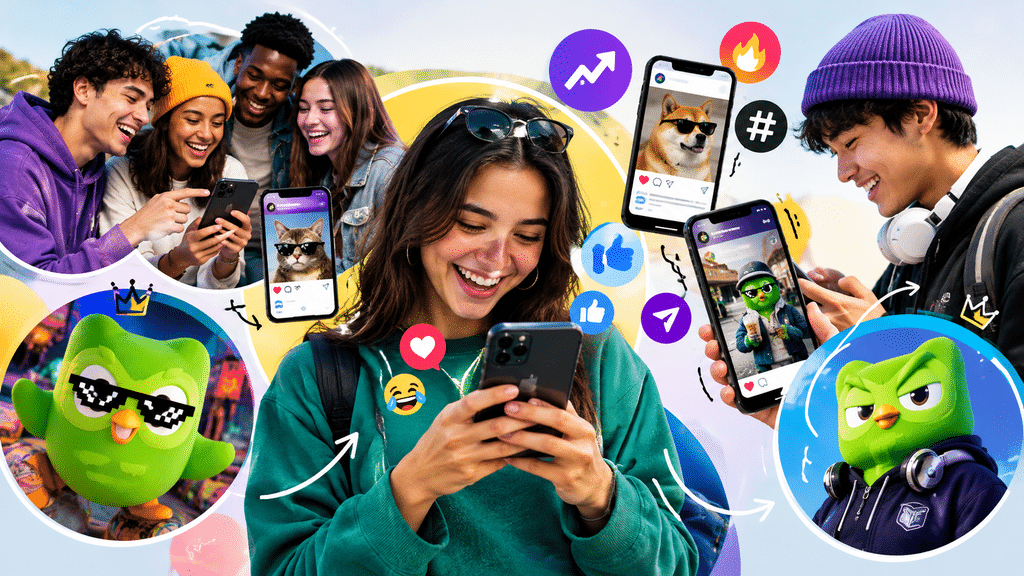
The whole trick is disguise. A brand’s meme looks, at a glance, exactly like something your friend posted or a random meme page reposted. No “Sponsored” tag flashing at you. Sometimes not even a logo until you hit the caption. That’s enough to get someone’s guard down just long enough for the message to actually register.
It Spreads for Free
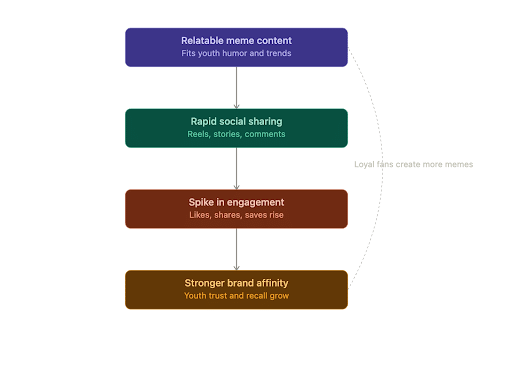
A paid ad stops the moment the budget runs out. A meme that hits keeps going on its own, someone tags a friend, someone throws it on their story, and suddenly a startup with basically no media spend is in front of thousands of people it never paid to reach. This is honestly the whole appeal for early-stage companies that can’t go toe to toe with a Coca-Cola budget. Distribution stops being about money and starts being about whether people actually relate to the thing.
It Moves at the Speed of Culture
A trend that’s alive on Monday can be completely dead by Thursday. Brands that can turn content around in hours instead of weeks get to ride that window while it’s still open. This is where most legacy brands lose, honestly. Their approval process is still running on a schedule built for TV commercials, and by the time it clears legal, the joke’s already dead.
It Builds Identity, Not Just Recognition
Here’s the difference that matters. A meme doesn’t just tell someone a product exists; it tells them the brand shares their sense of humor, their frustrations, and their inside jokes. That’s a much stickier kind of loyalty than “oh yeah, I saw their ad once.” Zomato’s Twitter account is a good case here. It built an entire personality out of self-deprecating jokes and pop culture references, and people started following it the way you’d follow a comedian, not a food delivery app.
Types of Meme Marketing
Not all meme content is built the same, and lumping it all together is a mistake plenty of marketing teams still make.
- Reactive or trend-jacking memes. These grab whatever format is trending right now, a viral audio clip, or a popular template, and swap in something brand-relevant. Try to sell something to a 19-year-old in 2026 and see how fast they will label it as an ad. Banner ads are blocked, display ads are skipped without hesitation, and even influencer marketing is met with the same reaction as an infomercial but with better lighting. There is an alternative that many young-oriented startups are using, and it has already proven to be somewhat effective. The cheapest and fastest way to engage with the new generation is through memes.
- Original brand memes. The most common mistake is to rip off someone else’s concept and force it to fit the brand, so a safer route is to base the marketing on an original idea. Some marketers take their inspiration elsewhere but manage to put their own spin on the concept. The most successful example of that is the owl from Duolingo, which created an entire gimmick around its brand that has nothing to do with language learning.
- Self-deprecating brand humor. The self-deprecating humor of the brand is also worth mentioning. Meme marketing gives the possibility to make a product more relatable by admitting its shortcomings. It is much harder to make fun of something you love, so humor is usually a sign of positive intent.
- User-generated meme content. Some brands lean on their own community to make the memes, then just repost the good ones. Suddenly your customers are doing your content creation for free, and the brand looks like it doesn’t take itself too seriously.
- Meme-as-education. A handful of startups use meme formats specifically to explain a feature or a pain point, because it’s funny enough to actually get watched instead of skipped like a tutorial would be.
Real Examples Worth Studying
Duolingo gets cited constantly at this point, and honestly, it deserves it. The green owl, unhinged on TikTok, threatening to cut users’ lives short if they do not complete lessons, has turned a language-learning app into an entertainment account. The trend, which took off on social media in 2021, continues to gain popularity.
Zomato has also joined in on the fun, engaging with Twitter users in India. The company responded to various concerns, including the urge to binge-watch TV series, with witty, sharp answers and humor. The Zomato Twitter team’s response style is so recognizable that other companies have tried to imitate it, with limited success.
Smaller startups have run the same playbook, just at a smaller scale. Fintech apps aimed at Gen Z, for instance, lean on memes about being broke or payday dread to make financial products feel less like a bank pitching a loan and more like advice from a friend who happens to know what they’re talking about.
Netflix India’s social team deserves a round of applause for their work on the promos involving memes about Money Heist and Squid Game, as it was a perfect blend of marketing and commentary that engaged younger viewers effectively.
What Works in Meme Marketing
Understand the origin of the meme before you touch it. Nothing tanks credibility faster than a brand using a format wrong, either because they didn’t get the original joke or because the trend already died three weeks ago. If you’re not sure, ask someone under 25 on the team before hitting post. Seriously, just ask.
Move fast, but don’t skip quality control. Speed is the whole advantage here, but only if someone’s still checking the work. Good rule of thumb: if it needs a legal review, it’s already too slow to matter.
Consistency beats any single viral hit. One great meme gets you a spike for a week. A recognizable voice sustained over months is what gets you the kind of following Duolingo has, where people check the account expecting to be entertained, not hunting for a discount code.
Rough beats polished, more often than you’d think. Memes that look too produced tend to underperform. A slightly janky screenshot-style post often reads as more real than something clearly built in a design tool.
- Own your actual weaknesses instead of hiding them. It reads as honest, not weak.
- Repost the good memes your community makes, credit them, and let people feel like co-creators.
- Keep one person (or a small team) whose entire job is just watching TikTok, Twitter/X, and Reels that week. Nothing else.
Common Pitfalls of Meme Marketing
Trying too hard is probably the number one failure mode, sometimes called “cringe marketing” internally. A brand forcing a format that doesn’t fit its product ends up looking like a substitute teacher trying to use slang. There’s a well-known meme about this exact phenomenon, the “how do you do, fellow kids” bit, which became a meme about brands failing at memes. That should tell you something.
Being late is nearly as bad as forcing it. Posting a format that peaked two weeks ago tells your audience your team isn’t actually plugged in; they’re just watching from a distance and reacting slowly.
Misjudging sensitivity is another pitfall of using humor in marketing, as a joke that works well internally may fall flat with a wider audience, alienating those who might have related to it. This is particularly the case with topics like money issues, mental health, and identity. More than one company has had to quickly take down a post that was meant to be empathetic but landed as mocking in the wider world.
Overusing a bit is a quiet killer as well. Even something as good as Duolingo’s owl threats needs to evolve, or it starts feeling like a gimmick instead of a running joke. Audiences notice repetition faster than most teams expect.
And sometimes it’s just a platform mismatch. A meme that was made for Twitter/X’s reply-based text culture could be a disaster as a carousel on Instagram, where the audience is used to scrolling horizontally.
A Practical Meme Marketing Framework for Getting Started
If you’re starting from zero, here’s a sequence that actually works:
- Spend a week just watching. Don’t post yet. Study what your target audience is actually sharing and laughing at across platforms before you try to join in.
- Give someone ownership. Meme content needs one culturally fluent person (or small team) who’s empowered to post fast without ten layers of sign-off.
- Build a light approval process. Same-day sign-off beats a week-long review cycle every time for anything time-sensitive.
- Start reactive, then go original. Get comfortable riding existing trends before you try building your own recurring bit or character.
- Track engagement quality, not just numbers. Comments and shares tell you a lot more about resonance than raw likes ever will.
- Add a sensitivity check. Even a two-minute gut check from someone outside the immediate team can catch a tone problem before it goes live and becomes a headache.
- Iterate fast. Keep what works, kill what doesn’t, and don’t be precious about it. This channel rewards speed over perfection, every time.
Conclusion
Meme marketing is not a novelty; it is the future of youth-oriented startups that want to beat their competitors by engaging users in a way that big spenders cannot afford. The companies that do it right, like Duolingo, Zomato, and other smaller successful players, are user-oriented and respect their audience enough to be authentic cultural commentators, not try to make a laugh at their expense.
Trends change, platforms disappear overnight, and a meme from the early 2010s is as incomprehensible as hieroglyphics to Gen Z but the companies that last and thrive are the ones that realize this and evolve with the times.
For reading more about insightful marketing topics , check out our page Eve Paper
Frequently Asked Questions
What is meme marketing?
Meme marketing uses humorous, relatable internet content to promote brands, products, or ideas while making communication feel natural, culturally relevant, and engaging for younger audiences.
How does meme marketing improve youth engagement?
Meme marketing improves youth engagement by using familiar humor, trends, and cultural references that encourage young audiences to interact, share, comment, and participate with brands.
Why is meme marketing effective for Gen Z?
Meme marketing feels less like traditional advertising and more like peer communication, helping Gen Z audiences connect with brands through humour, relevance, and authenticity.
Is meme marketing affordable for startups?
Yes, meme marketing can be highly affordable because successful memes can generate organic reach, shares, comments, and visibility without requiring large advertising budgets.
Which brands use meme marketing successfully?
Duolingo, Zomato, and Netflix India are notable examples of brands that use humour, cultural references, social media trends, and recognisable personalities to engage younger audiences.
What makes a meme marketing campaign successful?
A successful campaign understands the meme’s original context, moves quickly, maintains brand authenticity, respects audiences, and creates content that people genuinely want to share.
What are the biggest meme marketing mistakes?
Common mistakes include using outdated trends, forcing humor, copying concepts, ignoring cultural sensitivity, overusing jokes, and choosing platforms that do not suit specific meme formats.
Can meme marketing build brand loyalty?
Yes, consistent meme marketing can build brand loyalty by creating a recognizable personality, encouraging community participation, and making audiences feel that the brand understands their culture.
How should startups measure meme marketing performance?
Startups should measure comments, shares, engagement quality, audience sentiment, reach, follower growth, and conversions rather than judging campaign success only through total likes.
What is the future of meme marketing?
The future of meme marketing will depend on cultural awareness, speed, authenticity, platform-specific content, community participation, and the ability to evolve as youth trends change.
Connect Your Brand with Gen-Z
Unlock high-impact youth marketing strategies with EvePaper.
Book Strategy Call