
How to Prepare for a National Student Competition When You Have Never Competed Before
Published: September 12, 2026
Key Strategy Takeaways
- Read the rulebook twice with a break in between — a second pass catches critical details (time cutoffs, judge interruptions, round structure) that a single skim always misses.
- Attend the orientation call even if you think you already understand the format, since confusion on event day usually traces back to a short briefing that was skipped.
- Study past-year footage or notes not to copy approaches, but to spot where competitors got caught by the clock or stumped by a question.
- Find one person who has actually competed and ask what surprised them and what the judges genuinely reacted to; a ten-minute chat can save weeks of practicing the wrong thing.
- Reject cramming entirely — performing under pressure is built by doing it badly repeatedly over several weeks, never in one frantic weekend.
- Schedule around real life — three sessions a week for six weeks beats a daily grind you abandon by day six.
- Split practice into three buckets: content, delivery, and pressure handling; most people over-prepare content and get rattled by the two they ignored.
- Film yourself — filler words and rushed endings are invisible in your head but obvious on video, and that discomfort drives real correction.
- Rehearse the uncomfortable version: real visible timer, indifferent or honest audiences, and mid-sentence interruptions that mimic actual judging.
- Practice with your actual team, not stand-ins, so friction surfaces now instead of mid-round in front of a panel.
- Build a logistics checklist days in advance — venue, reporting time, IDs, and what tech is provided versus what you bring yourself.
- Over-buffer travel time — early and bored beats late and quietly panicking every time.
- Plan for nerves instead of fighting them — the goal is preventing sabotage, not feeling zero anxiety.
- Reframe the panel as evaluating a performance, not your worth as a person, which meaningfully takes the edge off.
- Expect something to go wrong and rehearse recovery; judges notice how you recover far more than the stumble itself.
- Write a 15-minute post-mortem immediately after, while it's fresh, to convert one competition into a transferable skill.
- Treat being new as a hidden advantage — you arrive without entrenched bad habits and prepare more carefully because you can't yet take anything for granted.
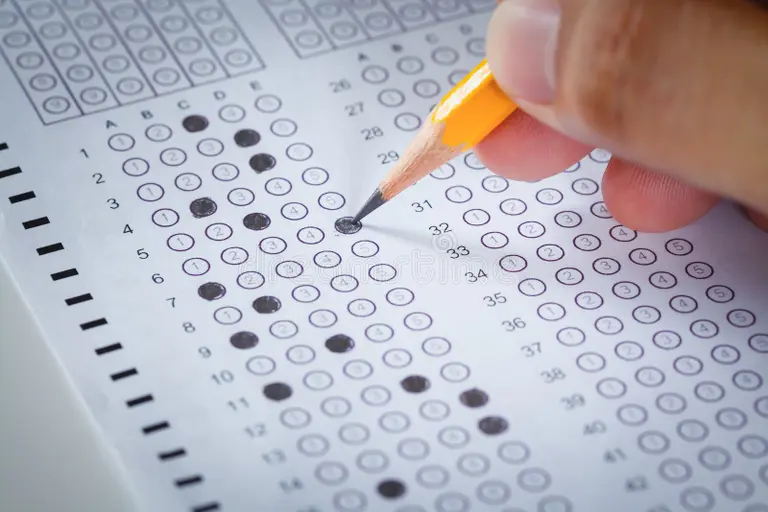
Student Competition Exam
Key Strategy Takeaways for Student Competition Exams
- Read the rulebook twice with a break in between — a second pass catches critical details (time cutoffs, judge interruptions, round structure) that a single skim always misses.
- Attend the orientation call even if you think you already understand the format, since confusion on event day usually traces back to a short briefing that was skipped.
- Study past-year footage or notes not to copy approaches, but to spot where competitors got caught by the clock or stumped by a question.
- Find one person who has actually competed and ask what surprised them and what the judges genuinely reacted to; a ten-minute chat can save weeks of practicing the wrong thing.
- Reject cramming entirely — performing under pressure is built by doing it badly repeatedly over several weeks, never in one frantic weekend.
- Schedule around real life — three sessions a week for six weeks beats a daily grind you abandon by day six.
- Split practice into three buckets: content, delivery, and pressure handling; most people over-prepare content and get rattled by the two they ignored.
- Film yourself — filler words and rushed endings are invisible in your head but obvious on video, and that discomfort drives real correction.
- Rehearse the uncomfortable version: real visible timer, indifferent or honest audiences, and mid-sentence interruptions that mimic actual judging.
- Practice with your actual team, not stand-ins, so friction surfaces now instead of mid-round in front of a panel.
- Build a logistics checklist days in advance — venue, reporting time, IDs, and what tech is provided versus what you bring yourself.
- Over-buffer travel time — early and bored beats late and quietly panicking every time.
- Plan for nerves instead of fighting them — the goal is preventing sabotage, not feeling zero anxiety.
- Reframe the panel as evaluating a performance, not your worth as a person, which meaningfully takes the edge off.
- Expect something to go wrong and rehearse recovery; judges notice how you recover far more than the stumble itself.
- Write a 15-minute post-mortem immediately after, while it’s fresh, to convert one competition into a transferable skill.
- Treat being new as a hidden advantage — you arrive without entrenched bad habits and prepare more carefully because you can’t yet take anything for granted.
Frequently Asked Questions
Should I read the rulebook once or multiple times?
Read it twice with a day or two in between. You’ll catch critical details the second time that you completely missed the first time—things like hard time cutoffs, whether judges interrupt you, and whether it’s team or solo competit
You know that feeling right before you register. Where you’re staring at the confirmation email wondering if you’ve made a mistake. Yeah. Let’s talk about that. Here’s something nobody tells first timers, and it would genuinely help if someone did. That team walking in looking completely put together, like they’ve done this a hundred times? They had a first competition too. It probably went worse than whatever you’re currently imagining for yourself.
So instead of another generic pep talk, this article walks through what actually helps when you’re starting from exactly zero. How to actually read a rulebook so it sticks. Why finding one person who’s already competed can save you weeks of wasted effort. How to build a practice schedule you won’t quietly abandon after four days. Why rehearsing in a comfortable, quiet room is basically preparing for a different event than the one you’ll actually face. The boring logistics that wreck otherwise solid performances. What to genuinely do about the nerves, since pretending they won’t show up isn’t a strategy. And what to do once it’s over, whichever way it goes.
Read the Rulebook Twice, Not Once
Most people skim the guidelines document once and figure they’ve got the gist. Don’t be most people here. Read it, put it down for a day or two, then read it again. You’ll catch things the second time you missed completely the first, I promise.
How many rounds. Team or solo. Is there a hard time cutoff or something softer. Do judges interrupt you with questions, or do you just talk uninterrupted and then leave. These details change everything about how you should be practicing, and weirdly, a lot of first timers never actually nail them down until the morning of. If there’s an orientation call for new participants, go. Even if you think you already get it. I’ve watched people skip these and then show up on the actual day confused about something that got explained clearly three weeks earlier in a fifteen minute call they didn’t bother joining.
One more thing, if you can dig up footage or notes from a past year, actually go through it. Not to copy anyone’s approach, but to notice what tripped people up. Where the clock caught someone off guard. What question made an otherwise strong team go quiet for a second too long. That tells you more than any strategy article will.
Find Someone Who’s Already Sat In That Room
Seriously, just ask around. A senior, an alum, literally anyone who’s been through this event before. Most people who’ve competed once are shockingly happy to talk about it, especially to someone clearly nervous and clearly trying to get it right.
Ask them what surprised them. Ask what they’d have wanted to know beforehand. Ask what the judges actually seemed to react to, because it’s often not quite what the official rules imply. A ten minute conversation like this can save you from practicing entirely the wrong thing for two weeks straight. It happens more than you’d think.
Stop Cramming. It Doesn’t Work Here.
Cramming gets a bad reputation it doesn’t always deserve for exams. For this though? It genuinely does not work. Presenting under pressure, thinking on your feet, working as a team when the clock’s running, none of that comes from one frantic weekend. It comes from doing it badly a bunch of times over several weeks until it stops being bad.
Build a schedule around your actual life. Three sessions a week for six weeks beats an exhausting daily grind for ten days that you quit on day six anyway. And split your practice into three separate things: the actual content, how you deliver it, and how you handle pressure. Almost everyone over prepares the content and completely ignores the other two, then gets rattled on the day by nerves, not by a gap in knowledge.
If speaking or presenting is involved, film yourself. It’s awkward, every single time, even after you’ve done it a dozen times. Do it anyway. You will not notice your own filler words or your habit of rushing the ending by just thinking about it. You’ll notice by watching it happen and cringing slightly, and that cringe is doing more work than any amount of mental preparation.
Practice the Uncomfortable Version, Not the Easy One
Here’s a trap almost everyone falls into without noticing. You practice in a quiet room, no time limit, in front of people who already like you and would never make you feel bad. Then the actual day shows up with a strict clock, strangers judging you, background noise, and a level of pressure that your cozy living room rehearsal did absolutely nothing to prepare you for.
So close that gap on purpose. Use a real visible timer, not a vague internal sense of how long five minutes feels. Practice in front of people who don’t already love you unconditionally, teachers, older students, someone’s parent who’s willing to be honest. Ask them to interrupt you mid sentence with a question, the way actual judges tend to do, instead of letting you finish your polished script every single time like it’s a monologue.
If you’ve got a team, rehearse with your actual team. Not a stand in. Team pressure during a real simulation looks nothing like team pressure during a relaxed planning session over snacks, and you’d much rather discover the friction now than mid round in front of a panel.
Don’t Let Logistics Wreck a Good Performance
This one’s almost embarrassing to admit, but it happens constantly. Someone shows up knowing their content cold and then gets thrown off by something completely unrelated. Wrong arrival time. Forgot an ID. Missing a cable nobody warned them they’d need. None of that says anything about how smart or prepared they actually are, but it absolutely wrecks the ten minutes before they’re supposed to walk in calm.
Make a checklist a few days out, not the night before at 11pm. Double check the venue, the actual reporting time, what tech gets provided versus what you need to bring yourself. If you’re traveling, add way more buffer time than feels necessary. Being early and slightly bored is such a better feeling than being late and quietly panicking, and yet people underestimate this every single year.
The Nerves Are Coming. Plan For Them Instead of Fighting Them.
Nobody, and I mean nobody, walks into their first national competition feeling totally calm. Anyone who tells you otherwise either isn’t being honest or wasn’t really paying attention to how they felt. The goal was never to feel zero nerves. It’s just to stop the nerves from actively sabotaging you.
A few things actually help. Familiarity beats fear, which is basically the whole point of all that simulation practice from earlier, it builds the skill and the comfort at the same time. Breathing slowly before you walk in sounds almost too simple to matter, but it does. So does arriving early enough that you’re not sprinting straight from stress into performance mode.
And here’s a mental shift worth making. You’re not walking in to be judged as a person. You’re walking in to show work you already put in. The panel is evaluating a performance, not deciding your worth as a human being, and keeping that line clear in your head genuinely takes some of the edge off.
Also, just accept this now, something will probably go a little wrong. An unexpected question. A slide that takes three extra seconds to load. A moment where your brain just blanks for two seconds too long. Almost every experienced competitor has a story exactly like this from their first event. Almost none of them remember it as the thing that defined their day. Judges notice how you recover a lot more than they notice the stumble itself.
Write It Down Afterward, Even If You’d Rather Not
Win, lose, somewhere confusingly in between, take fifteen minutes afterward and actually write down what you learned while it’s still fresh in your head. What worked. What you’d do differently. What surprised you compared to what you expected walking in.
People skip this constantly. Either they want to go celebrate and move on, or they’d honestly rather forget the whole thing happened. Both reactions make sense in the moment. Both are a little wasteful too. That fifteen minutes is what turns one competition into an actual skill you carry into the next one, instead of just a single memory you either liked or didn’t.
Going First Isn’t Only a Disadvantage
Being new at this feels like a handicap in the moment, and honestly, in some small ways it is. You don’t have the instincts that come from doing it five times already, and you genuinely can’t predict how the day will feel until you’re standing in it. But there’s a flip side worth remembering too. You walk in without the bad habits that creep into people who’ve gotten a little too comfortable with their old routine. You end up preparing more carefully precisely because you don’t yet know what you’re allowed to take for granted.
Everyone currently walking around with years of experience and a shelf full of medals started off exactly where you are right now. Unsure. I’m a little anxious. Getting ready for something they’d never actually done before. None of this guarantees a win, nothing honestly can. But it does mean whatever happens on the day, you’ll have earned it through real preparation instead of leaving it to chance. And that’s a genuinely solid place to walk in from.
Further Reading:
Is the orientation call really necessary if I think I already understand the format?
Yes. Go anyway. The article notes that people who skip it often show up on the actual day confused about something that was explained clearly three weeks earlier in a fifteen-minute call.
How should I use past-year footage or competition notes?
Don’t use it to copy someone’s approach. Instead, watch for what tripped people up—where the clock caught someone off guard or what question made a strong team go silent too long. This tells you more than any strategy article.
Should I find a mentor or someone who’s competed before?
Absolutely. Ask around for a senior, alum, or anyone who’s been through the event. Most people who’ve competed once are happy to talk about it. A ten-minute conversation can save you from practicing the wrong thing for two weeks straight.
Is cramming a good strategy for competitions?
No. Cramming does not work for performance-based competitions. Presenting under pressure and thinking on your feet come from doing it badly multiple times over several weeks, not from one frantic weekend.
Connect Your Brand with Gen-Z
Unlock high-impact youth marketing strategies with EvePaper.
Book Strategy Call