
Polymer upcycling in a Nutshell: From Plastic Waste to Valuable Chemicals
Published: June 26, 2026
Key Strategy Takeaways
- 1. Polymer upcycling offers an innovative solution to the growing plastic waste crisis by converting discarded plastics into valuable chemicals, fuels, and advanced materials rather than simply disposing of them or recycling them into lower-quality products.
- 2. The process helps maximize the value of plastic waste, extending the lifecycle of materials and reducing the need for virgin raw materials derived from fossil fuels.
- 3. By transforming waste into useful resources, polymer upcycling plays a crucial role in supporting a circular economy, where materials are continuously reused instead of being discarded after a single use.
- 4. Environmental benefits include reduced plastic pollution, lower landfill accumulation, decreased greenhouse gas emissions, and improved resource efficiency compared to conventional waste-management approaches.
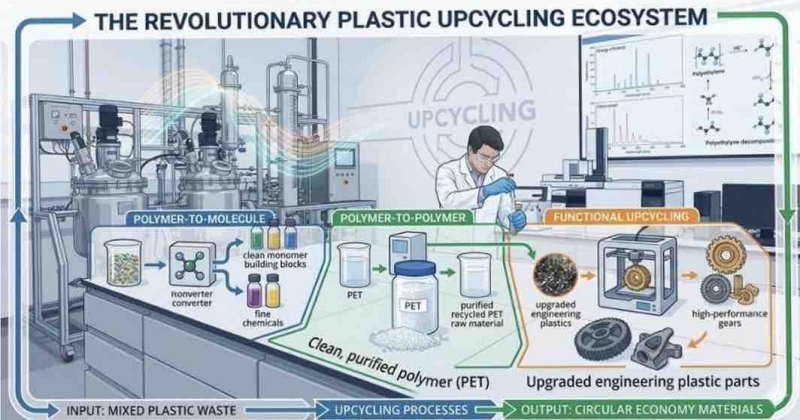
Plastic pollution is a global concern. Every year, tones of plastic waste end up in landfills and oceans. Traditional recycling often lowers the quality of the plastic, meaning it can only be reused a few times before becoming useless. Polymer upcycling is a new approach that changes this cycle by turning old plastic into high-value chemicals instead of low-quality products.
How Polymer Upcycling Works
• Chemical Breakdown
Specialized technologies use heat, catalysts, or biological agents such as microbes to break down long plastic chains (polymers) into smaller molecules called monomers. This allows plastic waste to be transformed into reusable building blocks for new products.
• Upgrading Quality
The resulting molecules are purified and restructured to create high-value materials with improved performance and functionality. Unlike conventional recycling, this process often produces materials that are equal to or better than the original plastic.
• Creating Raw Materials
The final products serve as valuable chemical feedstocks used in the production of pharmaceuticals, advanced electronics, specialty chemicals, and industrial fluids.
Why It Matters
• Reduces Fossil Fuel Use
Most plastics and industrial chemicals are manufactured from crude oil and natural gas. Polymer upcycling reduces dependence on these finite resources by using existing plastic waste as a raw material.
• Creates a Circular Economy
Upcycling supports a circular economy by keeping materials in use for longer periods. Instead of following the traditional “take-make-dispose” model, waste is continuously converted into valuable new products.
• Prevents Environmental Harm
By increasing the economic value of plastic waste, upcycling encourages collection and processing rather than landfilling, incineration, or environmental dumping.
Current Challenges
• High Energy Costs
Breaking the strong chemical bonds in plastics often requires high temperatures and sophisticated equipment, making the process energy-intensive and costly.
• Contamination Issues
Mixed plastic streams, food residues, adhesives, and labels can reduce processing efficiency and affect the quality of the final products.
• Scaling Up
Although many upcycling technologies have shown promising results in laboratories and pilot projects, large-scale commercial implementation remains a significant challenge.
Polymer upcycling is transforming the way we perceive plastic waste by turning it from an environmental burden into a valuable resource. Unlike traditional recycling methods, upcycling enables the production of higher-value materials and chemicals, contributing to a more sustainable circular economy. Although challenges such as high costs, technological limitations, and large-scale implementation remain, continued research and investment can help overcome these barriers. Embracing polymer upcycling is a crucial step toward reducing plastic pollution, conserving natural resources, and building a cleaner, more sustainable future for both society and the chemical industry.
CONCLUSION
Polymer upcycling transforms how we view plastic waste, treating it as a valuable resource rather than trash. While technological and financial hurdles remain, shifting from traditional recycling to chemical upcycling is essential for a cleaner planet. Investing in this technology will help protect nature and build a sustainable chemical industry.
Frequently Asked Questions
Q1. What is polymer upcycling?
Polymer upcycling is the process of converting plastic waste into valuable products such as fuels, specialty chemicals, and advanced materials. Rather than discarding used plastics, innovative technologies transform them into resources that can be reused in manufacturing and industrial applications.
Q2. How is polymer upcycling different from traditional recycling?
Traditional recycling typically involves melting and reprocessing plastics, which may reduce material quality over time. Polymer upcycling transforms waste into products with higher value and improved functionality, creating greater resource efficiency.
Q3. Why is polymer upcycling important?
It helps address plastic pollution by turning waste into useful resources, reducing dependence on virgin raw materials, minimizing landfill waste, and supporting sustainable manufacturing practices.
Q4. What are the environmental benefits of this technology?
Polymer upcycling reduces environmental pollution, lowers landfill usage, decreases greenhouse gas emissions, conserves natural resources, and promotes more sustainable waste-management systems.
Q5. How does it support a circular economy?
By converting discarded materials into valuable products, polymer upcycling keeps resources in circulation, reduces waste generation, and minimizes the need for extracting new raw materials.
Q6. What types of plastics can be converted into valuable products?
Many common plastics, including polyethylene (PE), polypropylene (PP), and polyethylene terephthalate (PET), can be processed into useful chemicals, fuels, and industrial materials.
Q7. Can this process help reduce landfill waste?
Yes. Instead of occupying landfill space for decades or centuries, plastic waste can be transformed into valuable products, reducing the volume of waste sent to disposal sites.
Q8. What industries benefit from plastic waste conversion technologies?
Industries such as chemicals, automotive, packaging, construction, electronics, and energy can benefit from recovered materials and alternative feedstocks generated through polymer upcycling.
Q9. Is this approach environmentally friendly?
When implemented efficiently, polymer upcycling offers significant environmental advantages by reducing pollution, conserving resources, and supporting responsible waste management.
Q10. Can plastic waste be converted into fuel?
Yes. Certain technologies can convert plastic waste into liquid fuels and other energy-rich products that can be used in industrial applications or further refined.
Q11. What are the economic benefits of recovering value from plastic waste?
Polymer upcycling creates new business opportunities, generates revenue from waste materials, reduces dependence on costly virgin resources, and encourages innovation in manufacturing and waste management.
Q12. What challenges does this technology face?
Major challenges include high investment costs, complex waste-sorting requirements, contamination issues, energy demands, and the need for advanced processing infrastructure.
Q13. How does this process contribute to sustainability?
It promotes sustainability by extending the life of materials, reducing waste generation, conserving resources, and lowering the environmental impact of industrial production.
Q14. What is the future of advanced plastic recycling technologies?
The future is promising as researchers, industries, and governments continue investing in technologies that improve efficiency, lower costs, and expand the range of plastics that can be processed.
Q15. Why is innovation important in plastic waste management?
Innovation enables the development of more effective methods for reducing plastic pollution, recovering valuable resources, and creating sustainable alternatives to traditional disposal methods.
Q16. How can governments and businesses support sustainable plastic waste management?
They can invest in recycling infrastructure, fund research and development, implement supportive policies, encourage responsible waste-management practices, and promote collaboration between public and private sectors.
Q17. What role does innovation play in improving plastic waste management?
Innovation drives the development of advanced technologies that transform waste into valuable resources, improve processing efficiency, reduce environmental impacts, and support long-term sustainability goals.
Citations & References
• L. T. J. Korley, T. H. Epps, B. A. Helms, and A. J. Ryan, “Toward polymer upcycling—adding value and tackling circularity,” Science, vol. 373, no. 6550, pp. 66–69, Jul. 2021, doi: https://doi.org/10.1126/science.abg4503.
• P. D. Goring and R. D. Priestley, “Polymer Recycling and Upcycling: Recent Developments toward a Circular Economy,” JACS Au, vol. 3, no. 10, pp. 2609–2611, Oct. 2023, doi: https://doi.org/10.1021/jacsau.3c00544.
TRANSFORM YOUR BRAND’S ENGAGEMENT WITH INDIA’S YOUTH
Drive massive brand engagement with 10 million+ college students across 3,000+ premier institutions, both online and offline. EvePaper is India’s leading youth marketing consultancy, connecting brands with the next generation of consumers through innovative, engagement-driven campaigns. Know More.
Mail us at [email protected]
Connect Your Brand with Gen-Z
Unlock high-impact youth marketing strategies with EvePaper.
Book Strategy Call