
Rangoli and Diya Painting on Campus: How to Organise a Festive Contest in Under Two Weeks
Published: November 13, 2026
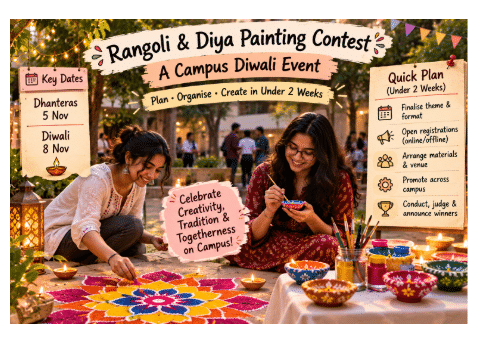
rangoli contestWith Dhanteras on 5 November and Diwali on 8 November, college committees have a short window to bring a festive activity to campus. A rangoli contest and diya painting competition are two practical choices because they give students a chance to take part, show their creativity and celebrate together without requiring a large event setup. The key is to keep the plan simple, communicate the rules clearly and arrange the materials and venue before the event day.
Decide the Format Before You Start Promoting
First, decide whether the rangoli contest and diya painting will take place together or as two separate activities. A combined event can create a lively festive corner, while separate time slots give participants more space and allow judges to focus on each activity. Keep the registration process short. Ask for the participant’s name, course, contact details and activity choice. You can allow individual entries for diya painting and individual or small-team entries for rangoli, depending on the space available.
Choose a clear theme, such as “Light, Colour and Tradition” or “A Greener Diwali”. A theme gives participants direction without restricting their ideas.
Use a Short, Realistic Planning Timeline
With limited time, divide responsibilities instead of allowing every task to depend on one committee member. In the first few days, confirm the date, venue, budget, permissions and contest rules. At the same time, open registrations and circulate a simple poster through class groups, society pages and campus noticeboards.
A few days before the event, confirm the number of participants, purchase or collect supplies, prepare the judging sheets and assign volunteers. One person can manage registration, another can coordinate materials, while others handle the venue, photography and participant queries. Share the final schedule with everyone in advance.
Arrange Materials and Keep the Budget Under Control
For rangoli, participants may use coloured powders, flower petals, leaves, rice, grains or other approved materials. If the committee wants an eco-friendly theme, encourage natural and biodegradable materials and avoid glitter, plastic decorations or products that may create unnecessary waste. Set a standard space for each entry so that all participants have a fair amount of room.
For diya painting, provide plain clay diyas, paint, brushes, palettes and water containers. Ask participants to bring an apron or old cloth if needed. Decide whether the committee will provide all materials or whether students should bring selected items. Communicate this clearly before registration closes. Buying supplies in reasonable quantities and reusing trays, tables and display materials can help keep costs low.
Make the Rules and Judging Criteria Clear
Publish the time limit, team size, allowed materials, design area and submission rules before the contest. Participants should know whether they can bring a design reference and whether the work must be completed entirely at the venue. Keep the rules consistent for everyone.
For rangoli, judges can assess creativity, originality, neatness, colour combination, use of materials and connection to the theme. For diya painting, useful criteria include design, finish, originality, colour use and overall presentation. A small panel of faculty members or art and cultural society representatives can judge the entries. Announce the criteria in advance so participants understand how their work will be evaluated.
Prepare the Venue and Manage Safety
Choose a level, well-lit area with enough room for participants and visitors to move around. Keep walkways clear and provide separate tables or marked spaces for each activity. Volunteers should be available to distribute supplies, answer questions and help maintain order.
If the event includes lit diyas, use a designated supervised area away from paper, fabric, paint supplies and crowded pathways. Keep water or suitable fire-safety equipment nearby, follow the college’s safety instructions and never leave flames unattended. An alternative is to display the painted diyas without lighting them during the competition.
Promote the Event and Share the Results
Promotion does not need to be complicated. Share one announcement poster with the date, venue, registration deadline, themes and contact person. Follow it with a reminder and a short behind-the-scenes post showing the preparation. On the day, take clear photographs of the finished rangolis and painted diyas, with participants’ permission. After the event, announce the winners, thank the volunteers and share a few highlights on the college’s social media pages.
Make the Celebration Worth Remembering
A successful campus contest is not measured by the size of its decorations or the number of prizes. It is about giving students a welcoming space to participate and enjoy the festival together. With clear rules, a manageable budget, thoughtful material choices and shared responsibilities, a committee can organise a memorable rangoli contest and diya painting activity even with a tight deadline.
References
[1] Appalachian State University, Office of Campus Activities, “Event Planning Resources: Event Planning Checklist.” [Online]. Available: https://campusactivities.appstate.edu/clubs-organizations/event-planning-resources
[2] Ahmedabad University, “Saathiya: Eco-Rangoli Competition.” [Online]. Available: https://ahduni.edu.in/academics/schools-centres/office-of-the-dean-of-students/student-events/saathiya-eco-rangoli-competition/
[3] Chief Electoral Officer, Goa, “Eco Friendly Rangoli: Competition Guidelines.” [Online]. Available: https://ceogoa.nic.in/appln/UIL/contests.aspx
[4] University of Michigan, Conference & Event Services, “Checklist for Student Meetings and Events.” [Online]. Available: https://conferences.umich.edu/studentorgs/checklist/
15 Frequently Asked Questions (FAQs)
- What is a rangoli contest, and how can colleges organise one during Diwali?
- How can a college organise a rangoli contest within two weeks?
- What themes can organisers choose for a campus rangoli contest?
- How can students register for a rangoli contest at their college?
- Should a rangoli contest be organised individually or in teams?
- What materials are required to organise a rangoli contest?
- How can colleges organise an eco-friendly rangoli contest using natural materials?
- What are the important rules to establish before conducting a rangoli contest?
- What judging criteria should be used to evaluate rangoli designs?
- How can organisers ensure fair judging during a rangoli contest?
- How can colleges manage the budget for a rangoli contest and diya painting competition?
- What safety measures should organisers follow during a campus rangoli contest?
- How can student committees promote a rangoli contest across their campuses?
- What responsibilities should volunteers handle during a rangoli contest?
- How can colleges make a rangoli contest more engaging and memorable for students?
20 Key Takeaways
1. A rangoli contest is an engaging way for colleges to celebrate Diwali while encouraging creativity, cultural participation and student interaction.
2. College committees can organise a successful rangoli contest within two weeks by following a simple and structured event-planning approach.
3. Organisers should decide whether the rangoli contest and diya painting competition will take place together or in separate time slots.
4. Selecting a clear theme, such as “Light, Colour and Tradition” or “A Greener Diwali”, helps participants develop creative ideas.
5. A simple registration process should collect essential participant details, including name, course, contact information and activity preference.
6. Dividing responsibilities among committee members helps manage registrations, materials, venue arrangements, photography and participant queries efficiently.
7. Organisers should confirm the event date, venue, budget, permissions and competition rules during the initial planning stage.
8. Common rangoli materials include coloured powders, flower petals, leaves, rice, grains and other approved decorative materials.
9. Eco-friendly rangoli contests can encourage students to use natural and biodegradable materials while reducing plastic and unnecessary waste.
10. Providing standardised design spaces ensures that participants receive equal opportunities and sufficient room to showcase their creativity.
11. A well-organised diya painting competition requires basic supplies such as clay diyas, paints, brushes, palettes and water containers.
12. Clear communication about material arrangements helps participants understand what the organising committee will provide and what they need to bring.
13. Publishing the time limit, team size, permitted materials and submission requirements before the event helps prevent confusion.
14. Rangoli designs should be evaluated using criteria such as creativity, originality, neatness, colour combinations, material selection and thematic relevance.
15. Diya painting entries can be judged on design, finish, originality, colour selection and overall presentation.
16. Selecting a well-lit, level and spacious venue helps participants work comfortably while allowing visitors to move around safely.
17. Organisers should follow appropriate fire-safety measures when displaying or lighting diyas and ensure that flames are never left unattended.
18. Promoting the rangoli contest through announcement posters, class groups, society pages and campus noticeboards can improve student participation.
19. Sharing photographs, announcing winners and appreciating volunteers after the competition helps extend the event’s reach through college social media platforms.
20. A memorable rangoli contest depends on effective planning, clear communication, fair judging, budget management and an inclusive atmosphere that encourages students to celebrate together.
Core Marketing Question
How can colleges organise an engaging and eco-friendly rangoli contest within two weeks to encourage student participation, celebrate Diwali traditions and create memorable campus experiences on a manageable budget?
Connect Your Brand with Gen-Z
Unlock high-impact youth marketing strategies with EvePaper.
Book Strategy Call