
7 Mistakes Students Make Before Entering an Online Competition
Published: September 12, 2026
Key Strategy Takeaways
- - Read rules twice: once at signup and again days before the deadline to catch quiet updates or hidden technical constraints
- - Perform honest calendar math by working backward from the deadline to list every stage, including building, testing, and submitting
- - Test all tech infrastructure early, including platforms, file formats, and hardware, while keeping a backup connection ready
- - Calibrate your entry by studying past winners and judging criteria to understand what the specific panel actually values
- - Communicate roles clearly within teams and use available community channels to solve problems instead of struggling in silence
- - Schedule dedicated time for formatting and polish, treating presentation as a critical scoring factor rather than a final-minute afterthought
- - Approach the project with genuine curiosity and risk-taking rather than doing the bare minimum to satisfy a rubric
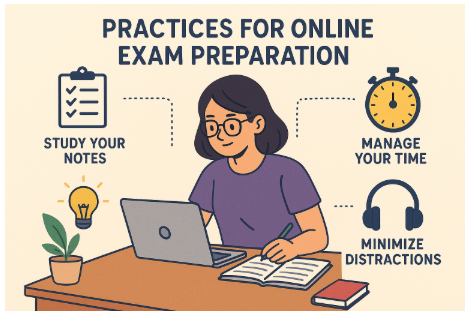
7 general mistakes made by students
Online Competition Key Strategy Takeaways
- Read rules twice: once at signup and again days before the deadline to catch quiet updates or hidden technical constraints
- Perform honest calendar math by working backward from the deadline to list every stage, including building, testing, and submitting
- Test all tech infrastructure early, including platforms, file formats, and hardware, while keeping a backup connection ready
- Calibrate your entry by studying past winners and judging criteria to understand what the specific panel actually values
- Communicate roles clearly within teams and use available community channels to solve problems instead of struggling in silence
- Schedule dedicated time for formatting and polish, treating presentation as a critical scoring factor rather than a final-minute afterthought
- Approach the project with genuine curiosity and risk-taking rather than doing the bare minimum to satisfy a rubric
A friend of mine spent three weeks building a genuinely solid entry for a coding online competition. Working backend, clean interface, the whole thing held together. He submitted it forty minutes before the deadline and got an automatic rejection almost right away. Wrong file format. It was in the rules somewhere, probably, buried in a paragraph nobody reads closely. Three weeks of work, gone, because of a formatting line item he never saw.
That kind of story comes up more than you’d think. Online competitions are everywhere now: hackathons, essay prizes, case study challenges, design sprints, and quiz leagues that run entirely over Zoom. Signing up for one takes about a minute. Fill a form, get a confirmation email, maybe join a Discord. Done. Except that’s the trap. Clicking register feels like progress, but it isn’t preparation.
This article is about the seven mistakes that show up again and again before students even get to the actual online competition, the small, avoidable things that happen in the days right after signing up, long before the deadline itself. None of them are about talent or intelligence. They’re procedural. Preventable. And they take down strong entries constantly, which is really the whole point of writing this down.
Mistakes often made by the students
The first mistake is not reading the rules properly. Nobody wants to read a rulebook. They’re long, dry, and half the time formatted like a legal disclaimer nobody’s supposed to actually finish. So people skim. They catch the headline, build an app, write under 1,500 words, pitch something in five minutes, and figure that’s basically it. It’s not, though. The real content is buried in the parts people skip. Word limits that are stricter than they sound. Accepted file types, because a PDF isn’t always just a PDF as far as some upload portals are concerned. Deadlines are listed in UTC when you live nowhere near it. This one gets people constantly, and organizers rarely go out of their way to flag it. Age brackets. Whether previous work counts as ineligible. Team size limits that seem flexible until they’re not. I heard about a team once that got disqualified after the fact because one member was technically a year above the eligible bracket. Would’ve taken ten seconds to check at signup. Instead, it surfaced weeks later, right when it hurt most. There’s also this: rules change, quietly, usually with no real announcement beyond an edited paragraph on a webpage somewhere. Reading them once at the start and assuming they’re frozen is its own quiet risk. Read them again a few days before you submit. Costs fifteen minutes, saves a lot more than that.
The second mistake is underestimating how long everything actually takes. Something strange happens with the time estimates on these things; they’re never accurate. A 48-hour hackathon sounds simple until you actually break down what fits inside those 48 hours. It’s not 48 hours of building, not even close. You’ve got to form a team first, then argue your way through a few bad ideas before landing on the one you’ll actually run with. Then there’s the coding itself, the testing, someone inevitably realizing at 3 a.m. that a core feature doesn’t work, and on top of all that, putting together a presentation that won’t fall apart in front of judges. All of it crammed into one window, and that’s before you subtract sleep, meals, and the general mess of trying to coordinate with teammates who might be three time zones away and awake at completely different hours than you. People sign up the way they’d register for a free online course they’ll casually get to eventually. Assume it fits around normal life without much friction. Then hour twelve hits and the real scope becomes obvious, and there’s just not enough time left to do it well. Not because the idea was bad. Because the math was wrong from day one. This gets worse when someone stacks three competitions into the same few weeks, usually right on top of midterms. Ambition’s fine. Bad scheduling isn’t, and it’s avoidable with about ten minutes of honest calendar math before hitting register on anything. It’s worth trying this: work backward from the deadline instead of forward from today. List every stage: research, building, testing, editing, and submitting, and put a rough number of hours on each. Add it up. It’s almost always bigger than you expected.
The third mistake is skipping the tech check. This one’s unglamorous, but it wrecks people. A lot of competitions run through some specific platform, and that platform always comes with its own baggage. Maybe it’s a coding judge that has weird quirks nobody warns you about. Maybe it’s a video uploader with a file size limit you only discover once your upload fails for the third time. Or a dashboard that renders fine on Chrome but breaks in some annoying way on Safari, and of course nobody finds that out until the night before. Then there are the ones that need a solid, fast internet connection, live rounds, timed challenges, and pitch sessions where you’re presenting in real time. In those, a dropped call isn’t just annoying. It’s basically your shot at winning, gone, before you even got to finish your sentence. The typical sequence goes like this: build the whole thing, feel good about it, then find out an hour before the deadline that the platform wants a video format you didn’t export in. Or the file’s too big. Or the live round needs a working webcam, and yours died two months ago and never got replaced. None of it’s really about quality. It’s infrastructure nobody tested until it mattered. And then there’s just plain Wi-Fi dying at the wrong moment. I watched someone lose a live pitch because their connection dropped mid-sentence once. A timed round doesn’t wait for you to reconnect. Test all of it early. Upload a dummy file. Join a test call if there is one. Check the camera, the mic, and the browser. And if there’s a live component, have a backup, a hotspot, a friend’s place with better internet, or a second device charged and ready.
The fourth mistake is ignoring what past winners did. Competitions that have run more than once usually publish something, winning entries, judge notes, and a rundown of what impressed the panel last time. Barely anyone looks at any of it. People walk in guessing what “good” means for that specific contest when the answer’s often sitting right there on the website. Not saying copy anyone; judges spot recycled formats fast, and it tends to backfire badly. It’s about calibration. A design competition rewarding minimalism is a completely different target than one rewarding technical depth, and without knowing which, it’s easy to spend weeks polishing exactly the wrong thing. If there’s no history to check because the competition’s brand new, look at the judging criteria instead. Read the mission statement closely rather than skimming past it. It usually tells you what they actually care about before a single entry’s been reviewed.
The fifth mistake is going it alone. A lot of people treat these things like a solo exam. Register, disappear, work quietly, and never ask anything even when genuinely stuck. Meanwhile, there’s usually a Discord or Slack running specifically so people can ask questions, sitting there mostly ignored while someone struggles privately with a problem ten other competitors have already solved. It’s worse with teams. A group forms; nobody actually talks through who’s doing what or how they’ll communicate, and three days in, two people did the same task while a third one never got touched. Ask the question that feels obvious. Have a slightly awkward conversation about roles early. Costs nothing, saves a lot. It’s also worth just texting a teacher or mentor for a quick outside opinion before sinking weeks into a direction. Fifteen minutes of someone else’s perspective catches blind spots you can’t see from inside your own project.
The sixth mistake is treating formatting like an afterthought. Judges reviewing these things are often going through dozens or hundreds of entries in a short window. A strong idea buried in a messy document, a file named “finalfinal2.zip”, a video where you can barely hear the audio, all of that costs points that have nothing to do with the actual quality of the work. People pour everything into the substance and leave formatting for the last fifteen minutes. Flip that around. Give it its own dedicated block of time. And hand the near-final version to someone who hasn’t heard you explain the project a dozen times already. If they follow it without extra context, you’re fine. If they can’t, fix it before submitting, not after.
The seventh mistake is treating it like homework. This last one’s about mindset, which makes it harder to catch in yourself while it’s happening. Some students approach a competition exactly like a class assignment: do the minimum, submit, and move on. That produces entries that are technically fine and completely forgettable. Competitions tend to reward actual risk-taking, a real point of view, and genuine curiosity about the problem rather than the rubric. That stuff rarely comes out of something assembled the night before out of obligation. Students who show up curious, who treat feedback as useful instead of personal, tend to stand out no matter how much experience they have. Judges can usually tell the difference between real thinking and a box being checked, even when both look polished on the surface.
Conclusion
None of these seven mistakes really come down to talent. Every single one of them is about attention, honest planning, and taking the process seriously enough not to wing it, and those are things any student can control no matter how much experience they have. Read the rules properly, and don’t just read them once and assume you’ve got it; go back and check again closer to the deadline. Be honest with yourself about how long things will actually take, not how long you’re hoping they’ll take. Test your tech before it absolutely has to work, not in the middle of a live round when there’s no room left to fix anything. Look at what’s actually worked for people before you, rather than just guessing and crossing your fingers. If you’re stuck on something, ask. Don’t just sit there quietly struggling through it on your own when someone could probably answer it in two minutes. And when you finally get to the last version of whatever you’re submitting, give it real polish, the kind that actually takes time and effort, not the rushed kind you slap together in the final ten minutes because you burned through all your runway earlier. But more than anything else, care about the actual problem in front of you. Not the clock. Not just getting something in before the deadline hits.
So the next time some competition catches your eye, don’t just register on impulse and tell yourself you’ll sort out the details later. Take that one hour upfront. Read things properly, plan honestly, actually prepare. It seems like such a small thing to do early on, but it ends up paying off in a way that no frantic last-minute scramble ever quite manages to match.
Frequently Asked Questions
What is the most common reason strong entries get rejected?
Procedural errors, specifically failing to read the fine print regarding file formats, time zones (often UTC), and eligibility criteria.
Why do students consistently underestimate the time required?
They view deadlines as a block of time for “building” rather than accounting for team coordination, debugging, presentation creation, and administrative tasks.
How should I prepare for technical failures?
Test the submission platform, file size limits, and hardware (webcam/mic) days in advance. Always have a backup internet source, such as a mobile hotspot, for live rounds.
Should I copy previous winning entries to ensure success?
No. Instead of copying, use past winners to calibrate your understanding of what the judges value (e.g., minimalism vs. technical depth).
How do I handle working in a team effectively?
Have an explicit conversation about roles immediately to prevent duplicated work or neglected tasks, and use official Discord/Slack channels to ask questions rather than struggling in silence.
Citations & References
What to Do in a Hackathon as a Beginner – Complete Guide for Newcomers. Where U Elevate. https://whereuelevate.com/blogs/what-to-do-in-a-hackathon-as-a-beginner-complete-guide-for-newcomers
How to Prepare for Your First Hackathon: Beginner’s Guide. Placement Preparation. https://www.placementpreparation.io/blog/how-to-prepare-for-your-first-hackathon/
8 Mistakes That Definitely Help You Screw Up at Hackathon. Sigma Software. https://sigma.software/about/media/8-mistakes-definitely-help-you-screw-hackathon
What Are Some of the Common Pitfalls or Mistakes to Avoid When Participating in a Hackathon? LinkedIn Collaborative Articles. https://www.linkedin.com/advice/1/what-some-common-pitfalls-mistakes-avoid-when-participating
Connect Your Brand with Gen-Z
Unlock high-impact youth marketing strategies with EvePaper.
Book Strategy Call