
What Is a Credit Score Really Telling Lenders About You?
Published: September 12, 2026
Key Strategy Takeaways
- Frame Credit Scores as Dynamic, Not Permanent
- Manage Approval Expectations via "Score vs. Capacity"
- Focus Messaging on Controllable Financial Levers
- Promote Credit Report Literacy alongside the Score
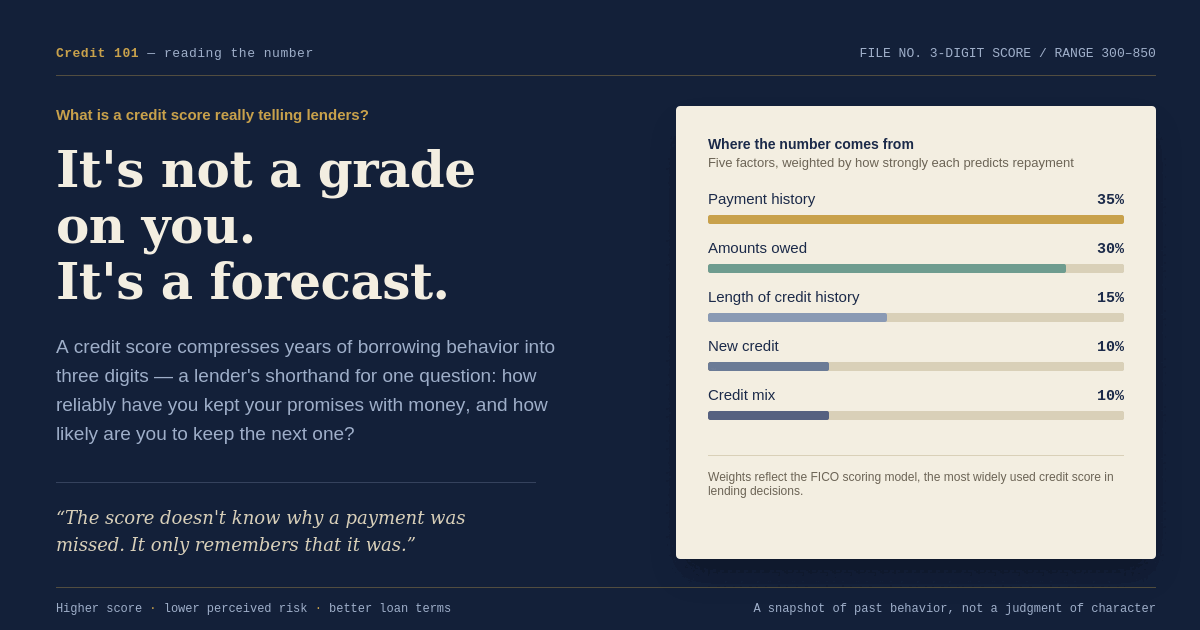
Abstract – The credit score is one of the most commonly used measures in consumer loans. The credit score can help in estimating how responsibly a person has handled credit in the past as well as the possible risks associated with providing new credit. Nonetheless, the credit score is just a partial picture of the financial standing of a borrower. The credit score is based on information provided in a credit report, which usually shows aspects such as payment record, usage of credit, history of credit, and credit inquiries. This article aims at highlighting what the credit score tells a lender about a particular borrower, how various credit activities can affect it, and why borrowers need to consider other aspects of their credit profile apart from the credit score.
Keywords – credit score, credit, credit report, borrowing, repayment history, credit utilization, lenders, financial management.
INTRODUCTION
Credit plays an important part in today’s world of personal finances. One may make use of credit card, education loan, personal loan, auto loan, or mortgage to fulfill his or her financial obligations. Lenders have to find out before making any such loan whether the prospective borrower is going to pay back the loan.
The credit score gives lenders a standardized method for assessing their credit risks. Credit score in layman’s language is a numeric evaluation of one’s credit history. Higher credit scores signify good credit history whereas lower scores indicate higher risks for the lender.
Credit scores are never a complete assessment of one’s financial status or income. Rather, they are meant to help assess the risk of the credit to be extended by them.
WHAT DOES A CREDIT SCORE MEAN?
Credit scores are created based on data drawn from the credit history of an individual. The credit bureau collects data related to the borrowing and repayments practices and creates a score using statistical analysis.The credit score provides an answer to a vital question for lenders:”Considering this individual’s past credit practices, what is the probability that he or she will use new credit in an adequate manner?”As such, the credit score provides information about patterns in the borrower’s credit usage like paying on time, utilizing the available revolving credit, holding an account for a certain period, and applying for multiple credit facilities recently.It is crucial to understand that the credit score is not fixed but dynamic and can be changed based on new data and behavior of a borrower.
WHAT LENDERS CAN LEARN FROM YOUR CREDIT SCORE Repayment History
Among the important messages conveyed in the credit report is that of the repayment history. Making consistent repayments in a timely manner shows that an individual manages his/her debt responsibly
On the other hand, late payments or default may be a sign of increased credit risk. For the lender, the history of the borrower’s repayments is important to make a judgment on how the individual will pay back in the future.
Thus:Consistent repayments → Good credit record → Low credit risk In contrast:Late or missed payments → Poor credit record → High credit risk
It is worth noting that this does not imply that just because of one single event an individual’s financial life is decided.CREDIT UTILIZATION AND WHAT IT SIGNALS
Credit utilization can be defined broadly as the percentage of available credit that the borrower is using at the moment.Let us take an example. If an individual has a total credit limit of ₹100,000 and has utilized ₹30,000 in revolving balances, then the utilization ratio is:
Credit Utilization = (₹30,000 / ₹100,000) * 100 = 30%A higher level of utilization implies that a borrower is relying extensively on available credit. This might create risks for the lender as the borrower may have lower flexibility in managing additional debts.
Lower credit utilization in addition to prompt payments suggests proper management of available credit.However, credit utilization is just one part of a credit picture and must not be looked at in isolation.
LENGTH OF CREDIT HISTORY
Additionally, the length of time a person has used credit can be used by creditors to gather information about that person.
A longer credit history means that there is more past information on how a borrower has managed his or her financial responsibilities. A person who has used credit responsibly over several years may have more past information to prove himself or herself than a person who has just started using credit.This does not imply that young individuals or those who are new to credit usage are all financially irresponsible. This simply implies that they do not have much past information to be evaluated by the lender.Thus, a positive credit history takes time.
TYPES OF CREDIT AND CREDIT MIX
Credit is something that can come in many different forms such as credit card and installment loan. A diverse credit mix will help creditors to have more knowledge about how a debtor pays off various forms of credits.
For instance, paying off credit card is the process of handling revolving credit while installment loan is repaying the loan on a fixed schedule. As a result, the credit mix of a debtor can include information on different forms of credit. However, debtors are not supposed to borrow just for the sake of having a certain credit mix.WHAT A CREDIT SCORE DOES NOT TELL LENDERS
While the credit score is helpful, it is not sufficient to know all about the borrower.
Some things that are generally not captured by the credit score include:Salary or income Stability of employment Savings and investments Household expenditure Future financial commitments Financial goals Capacity to handle an unexpected cost
Hence, the lenders might consider other factors when reviewing a credit application. This will depend on what kind of credit is sought, but can include such things as income, employment information, current financial commitments, documentation, collateral, and lender criteria.Hence, while a good credit score is important, it does not automatically result in credit being provided.
CREDIT SCORE VERSUS CREDIT REPORT
There is a close relationship between credit scores and credit reports, yet they refer to different concept
.A credit report includes a lot of data concerning one’s credit accounts and payment history.A credit score consists of summarized credit information represented in numeric form as an indicator of credit risk.
One of the simplest explanations is that:Credit report = Comprehensive credit history Credit score = Numeric representation to determine credit risk It means that, for example, borrowers should also pay attention to their credit reports.
CONCLUSION
Credit scores go beyond the simple numbers represented in three digits. They serve as a barometer that assists lenders in understanding trends in the use of credit by the borrower in the past. Such factors like repayment history, credit utilization rate, the duration of credit history, the type of credit, and recent credit inquiries could affect the information contained in a credit report.
At the same time, credit scores do not provide lenders with comprehensive information about a person’s financial standing. Some additional factors like income, spending habits, debts, employment status and other information might have an impact on the borrowing decision as well.
The lesson that should be learned by consumers from the discussion above is the fact that a good credit report is created due to consistent and responsible management of finances. Punctual repayments of obligations, responsible borrowing, review of credit reports, and proper borrowing can help to create better financial standing.
Overall, the score should be considered as an additional tool used by lenders to analyze credit risk rather than as a measure of financial worth.TRANSFORM YOUR BRAND’S ENGAGEMENT WITH INDIA’S YOUTH
Drive massive brand engagement with 10 million+ college students across 3,000+ premier institutions, both online and offline. EvePaper is India’s leading youth marketing consultancy, connecting brands with the next generation of consumers through innovative, engagement-driven campaigns. Know More.
Mail us at [email protected]
Frequently Asked Questions
What is a credit score, and why do lenders use it?
A credit score is a numeric evaluation of an individual’s credit history. Lenders use it as a standardized metric to assess credit risk and determine the probability that a prospective borrower will use new credit responsibly and pay back a loan.
Does a high credit score reflect my overall wealth or income?
No. A credit score is strictly a measure of credit risk based on past borrowing and repayment habits. It does not reflect your salary, employment stability, total savings, investments, or general financial worth.
What is the difference between a credit report and a credit score?
A credit report is a detailed document containing your comprehensive history of credit accounts, payment habits, and borrowing activity. A credit score is a single summary number generated by analyzing the report’s data to quantify risk.
How does payment history impact a credit score?
Payment history is a key indicator of risk. A consistent record of timely payments signals responsible debt management and low risk, while late or missed payments signal potential defaults and higher risk.
What is credit utilization, and how is it calculated?
Credit utilization is the percentage of your total available credit currently being used. It is calculated by dividing your current balances by your total credit limit and multiplying by 100 (e.g., spending ₹30,000 out of a ₹100,000 limit equals a 30% utilization ratio).
Why is high credit utilization considered risky by lenders?
High utilization indicates heavy reliance on available credit. This signals to lenders that you may have limited financial flexibility to manage additional debt obligations, making you a potentially higher-risk borrower.
How does the length of my credit history affect my profile?
A longer credit history provides lenders with more historical data proving your ability to manage financial obligations over time. A short credit history doesn’t mean you are irresponsible; it simply means there is less data available to evaluate you.
Citations & References
[1] Consumer Financial Protection Bureau, “What is a credit score?” Consumer Financial Protection Bureau, Washington, DC, USA.
[2] Consumer Financial Protection Bureau, “How do I get and keep a good credit score?” Consumer Financial Protection Bureau, Washington, DC, USA.
[3] TransUnion CIBIL, “Credit Score and Credit Report,” TransUnion CIBIL, India.
[4] Reserve Bank of India, “Credit Information Companies (Regulation) Act and related credit information framework,” Reserve Bank of India, Mumbai, India.
[5] Federal Trade Commission, “Understanding credit,” Federal Trade Commission, Washington, DC, USA.
Connect Your Brand with Gen-Z
Unlock high-impact youth marketing strategies with EvePaper.
Book Strategy Call